

ract
Abst
Abst
ract

The Palouse region, located in southeastern Washington, extending into Idaho and Oregon was originally home to the Palus people. The area was transformed in the 1800s as settlers arrived under the Homestead Act.
Indigenous communities were displaced, and the land was reshaped by agriculture. The region’s deep loess soil and steep terrain led farmers to adopt contour plowing, giving the fields their signature flowing appearance.
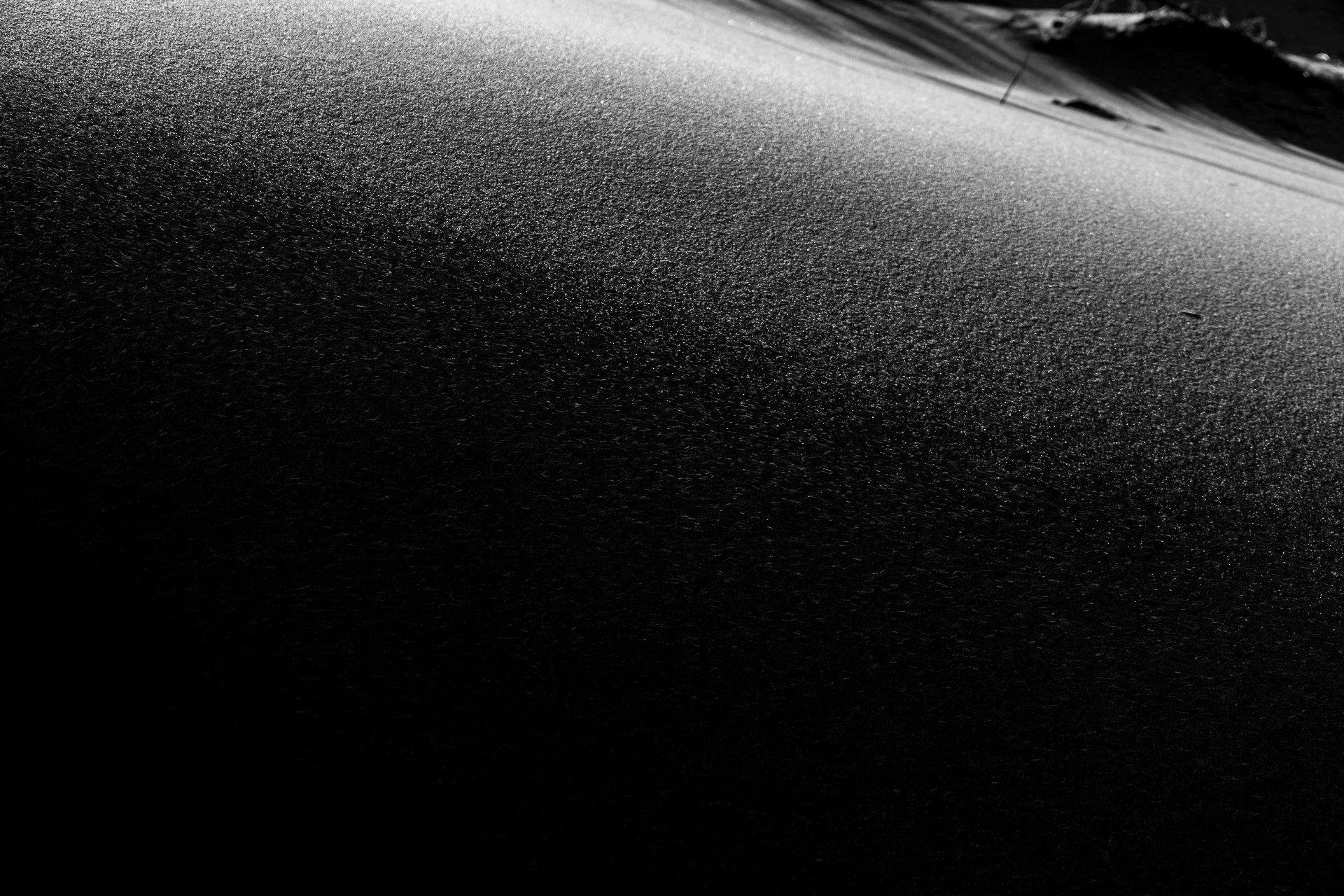
Traveling through the Palouse region was an out of body experience. The word space takes on a new meaning as you meander through its rolling hills. The vibrant colors and different stages of tilling make each turn unique. Finding the form and color of this hillside fascinating, I decided it was worthy of its own frame.

Crater Lake, located in Southern Oregon, feels too big for a single frame. I struggled to fathom its size while I stared at it. And the blue reflected by that lake one of the most saturated blues I’ve ever seen in nature.
This deep blue comes a myriad of factors but, two big ones are the fact that the lake’s source is almost entirely snowfall and rainfall leading to very little sediment. The other factor is how deep the lake is. Crater Lake is a whopping 1,943 feet, leading to more pronounced absorption of wavelengths other than blue.
I felt it deserved its own frame.

Buckskin Gulch, located in the Paria Canyon-Vermilion Cliffs Wilderness area, is the longest and deepest slot canyon in United States and possibly the world.
Marked by their sinuous carved rock, typically sandstone, slot canyons are often formed through water erosion over long periods of time. Flash floods are what make these strikingly beautiful canyons also some of the most dangerous to hike, with the runoff from a storm ten miles away potentially leading to the canyon on a day with clear skies.
These walls form their own abstract art where light reveals and conceals form, changing each minute with the path of the sun. This patch in particular caught my eye, not only for its abstract nature, but the small patch of life growing along its walls.

Buckskin Gulch, located in the Paria Canyon-Vermilion Cliffs Wilderness area, is the longest and deepest slot canyon in United States and possibly the world.
Marked by their sinuous carved rock, typically sandstone, slot canyons are often formed through water erosion over long periods of time. Flash floods are what make these strikingly beautiful canyons also some of the most dangerous to hike, with the runoff from a storm ten miles away potentially leading to the canyon on a day with clear skies.
These walls form their own abstract art where light reveals and conceals form, changing each minute with the path of the sun. This patch in particular caught my eye, evoking nature’s version of yin and yang.
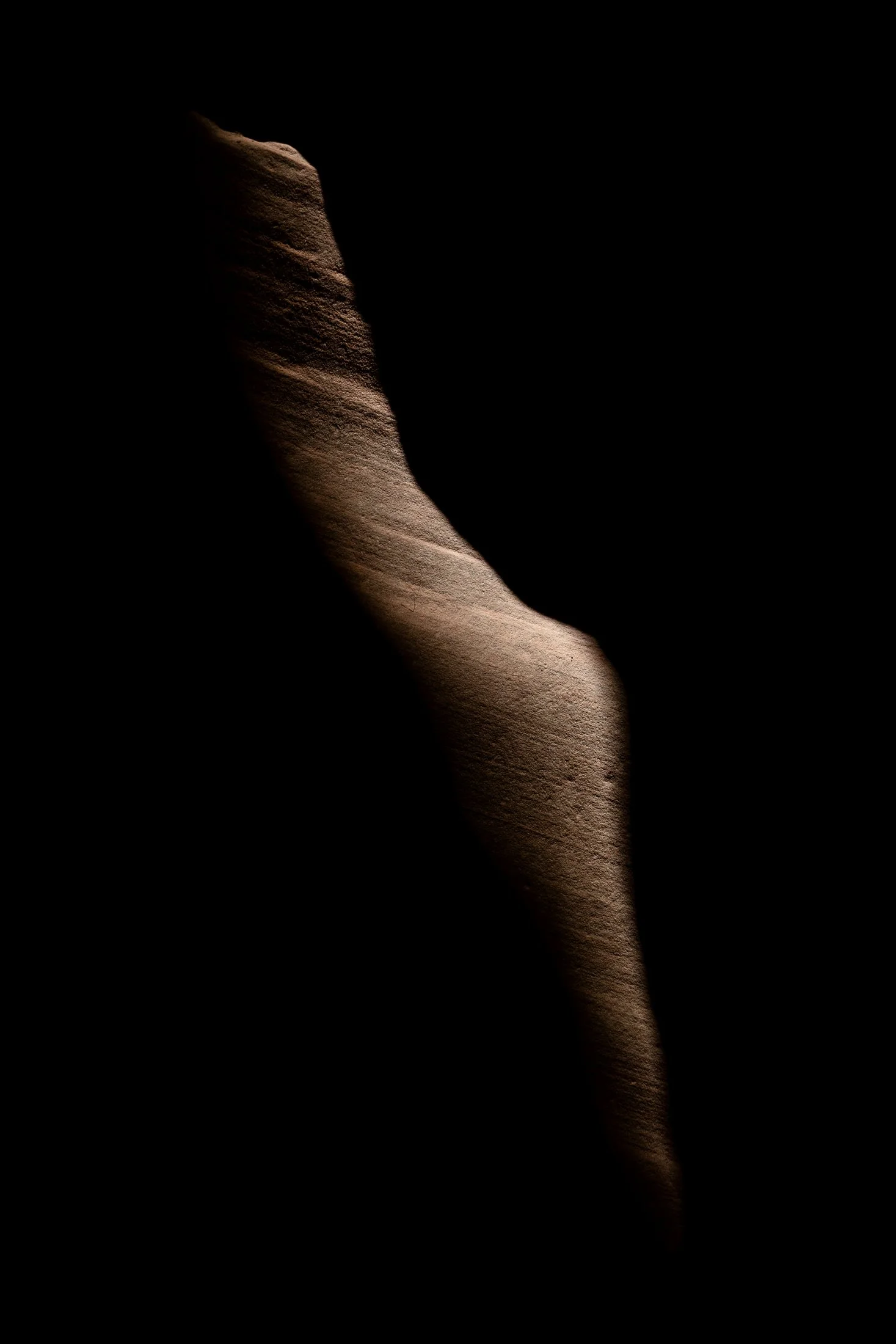
Buckskin Gulch, located in the Paria Canyon-Vermilion Cliffs Wilderness area, is the longest and deepest slot canyon in United States and possibly the world.
Marked by their sinuous carved rock, typically sandstone, slot canyons are often formed through water erosion over long periods of time. Flash floods are what make these strikingly beautiful canyons also some of the most dangerous to hike, with the runoff from a storm ten miles away potentially leading to the canyon on a day with clear skies.
These walls form their own abstract art where light reveals and conceals form, changing each minute with the path of the sun. On my third venture into this slot canyon, the light caught this particular patch of sandstone highlighting its sinuous nature allowing for an eerie contemplation of the form itself.

The Grand Staircase-Escalante National Monument region is renowned for its expansive layers of sedimentary rock, shaped over millions of years by wind, water, and tectonic activity.
Visitors to the area encounter a breathtaking variety of rock features, including narrow slot canyons, towering cliffs, slick rock domes, and natural arches. These rocks not only define the physical character of the region but also serve as a natural record of Earth’s history.
This photograph was taken due to the need to escape the intense heat of the area, finding refuge in this little pocket of rock, providing important shade. This shade was a full 30 degree cooler from that of the exposed sun. While lying on a large slab of broken rock, the view above was an abstract wonder, only needing the right framing.
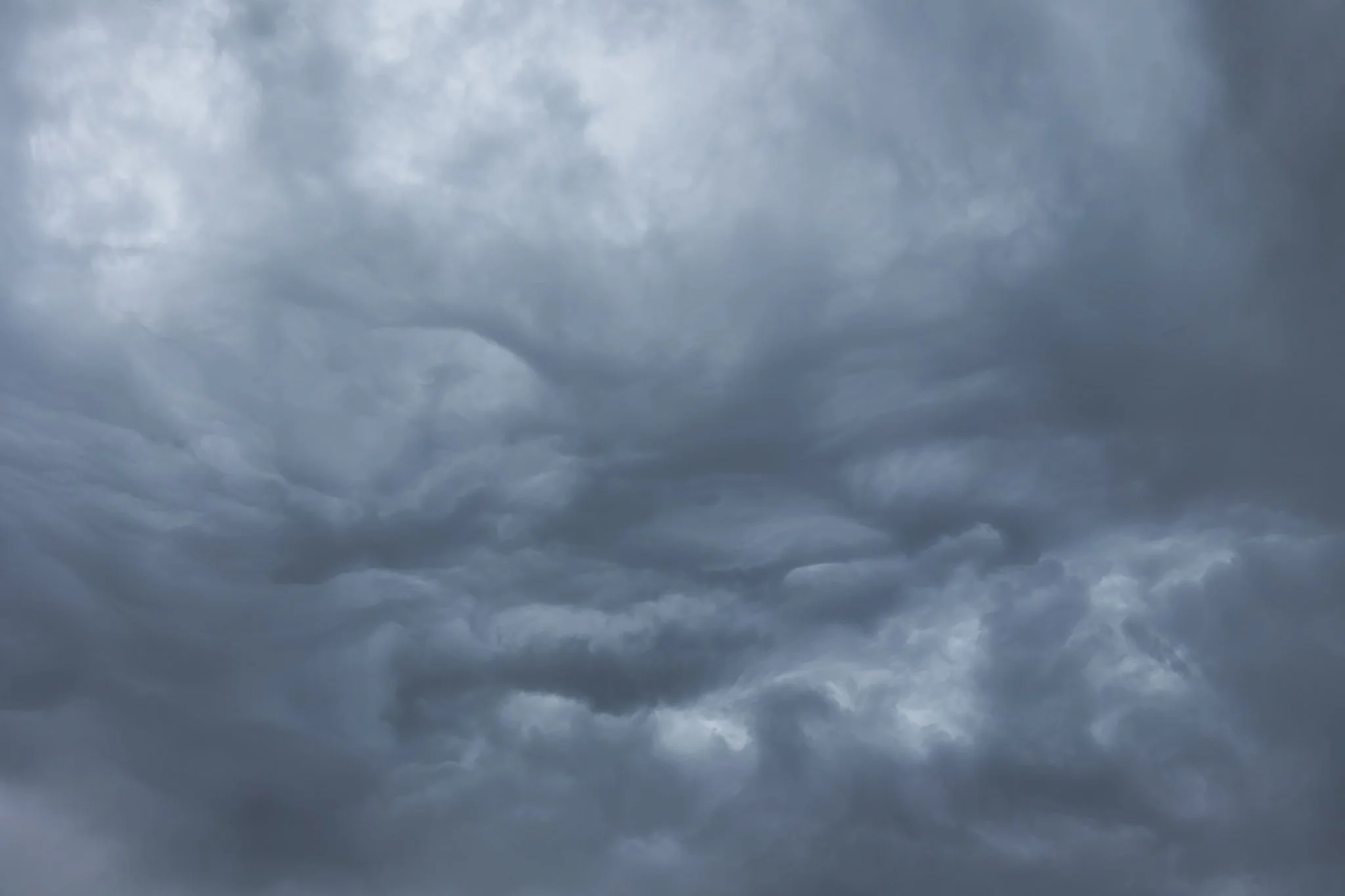
Chicago, and the Midwest in general, are known for having overcast skies half of the year and this day, taking off from Chicago at the tail end of a storm, was no different.
I now always make sure to grab a window seat when flying as I have encountered so many fascinating views flying through the clouds. There is a perspective that is missed on the ground when you are that high up and this beautiful abstraction of grey clouds swirling in strange formations was no exception.
I’m drawn to abstract photography for the reason most are. A lack of form allows the mind to explore itself. One can find meaning from an interior space rather than an exterior one, and it is something I often explore on my travels.

“Time is, time was, but time shall be no more.”
- James Joyce (Portrait of an Artist as a Young Man) -
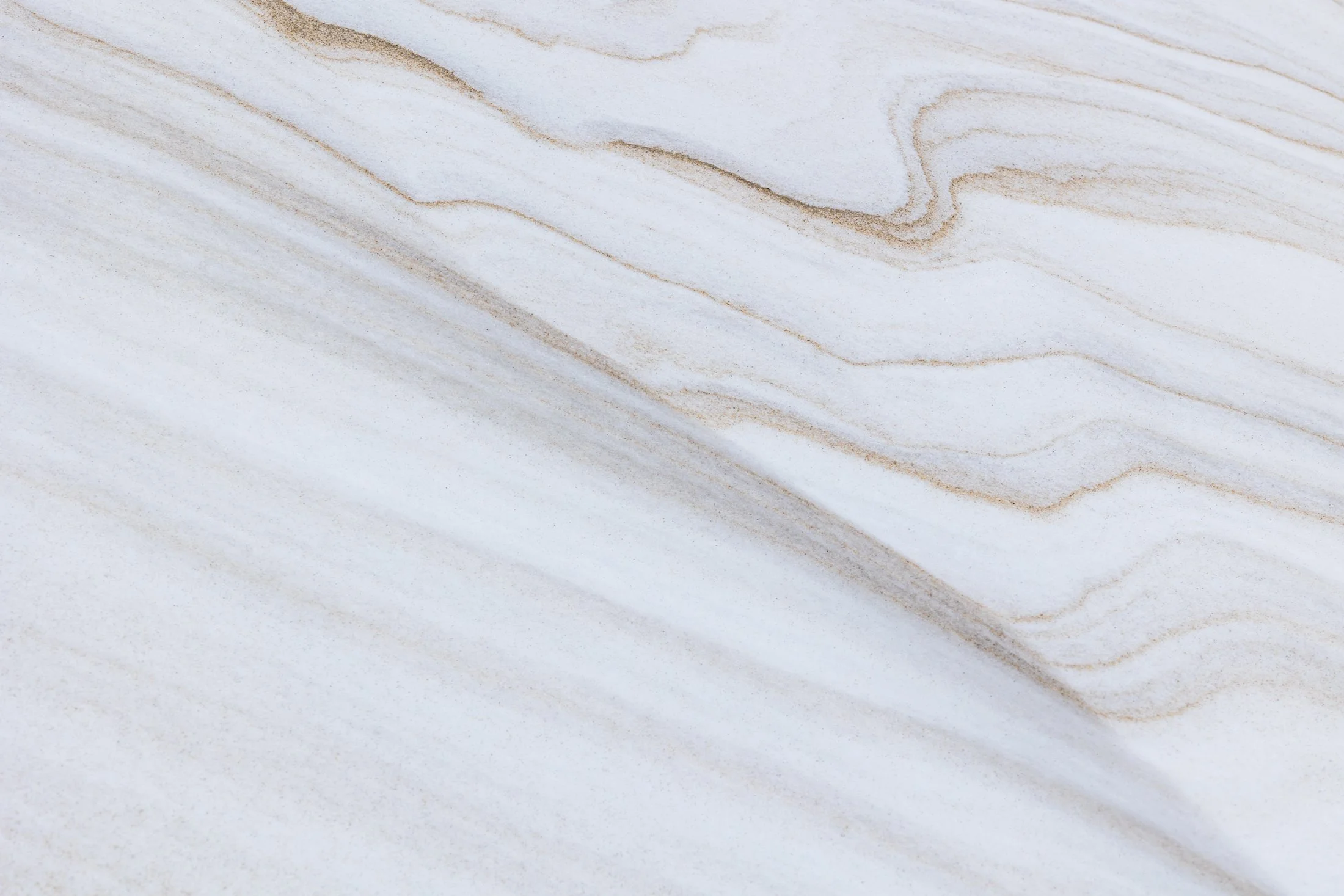
These naturally occurring abstract patterns, created by the interplay of wind, water, and sediment, decorate the beaches of Manistee, Michigan. The fine-grained sand reminds one of marble, with its dramatic and delicate textures. They’re a quiet, fleeting reminder of nature’s handiwork.
This was my second visit to the Manistee Lighthouse, with both events being particularly cold days. This day just happened to be my birthday. Finding the right frame for these abstractions can take a bit, and on a cold day like this, it is a race against frostbite. This frame, out of all the ones I took, felt like the best representation of the abstract art in the natural world.
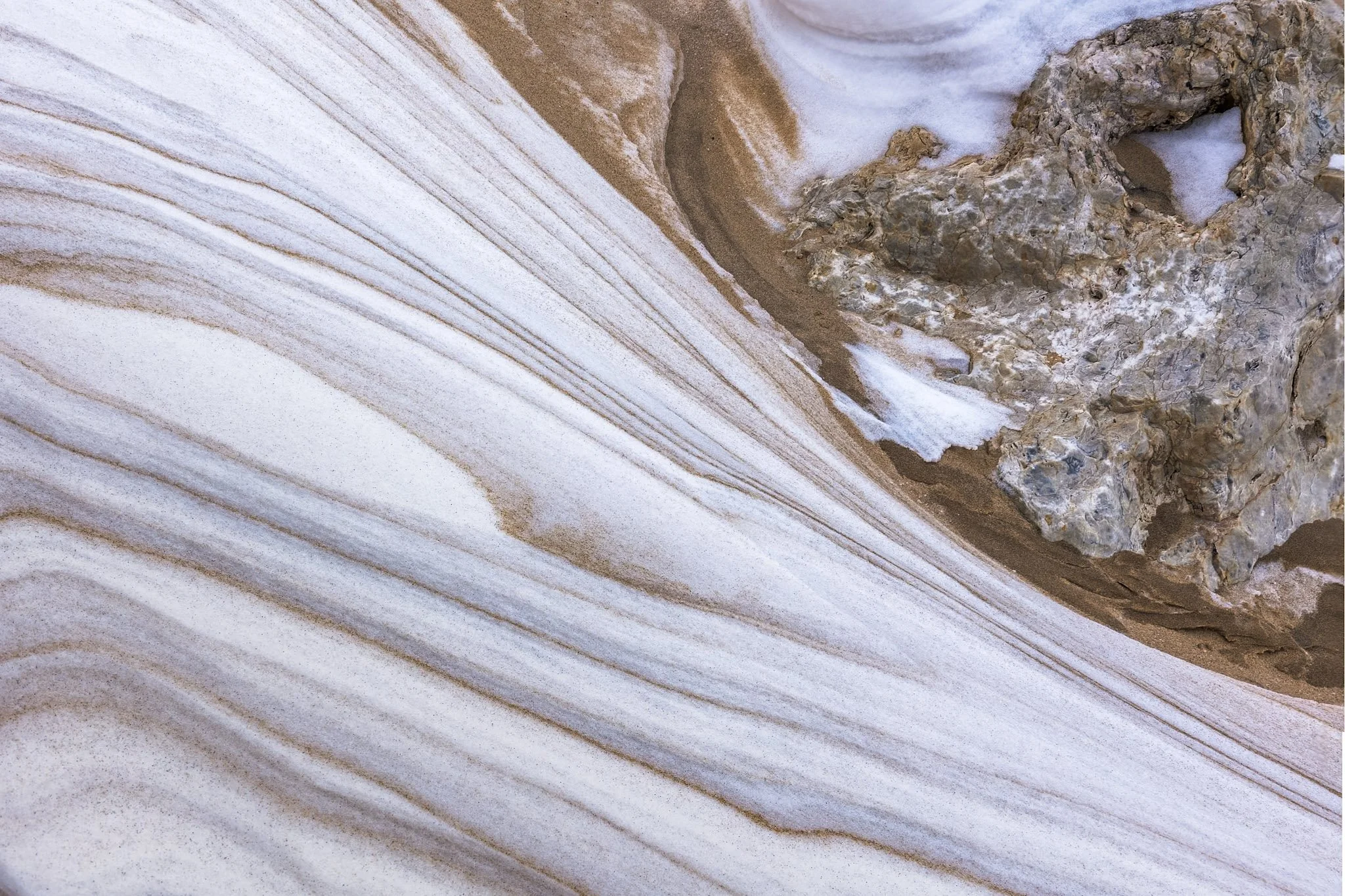
These naturally occurring abstract patterns, created by the interplay of wind, water, and sediment, decorate the beaches of Manistee, Michigan. The fine-grained sand reminds one of marble, with its dramatic and delicate textures. They’re a quiet, fleeting reminder of nature’s handiwork.
This was my second visit to the Manistee Lighthouse, with both events being particularly cold days. This day just happened to be my birthday. Finding the right frame for these abstractions can take a bit, and on a cold day like this, it is a race against frostbite.
I love the transition of form in this frame, juxtaposing the sinuous form of the snow-covered sand against the solid rock underneath. The variation in nature’s abstract forms has always fascinated me, and become something I keep an eye out for in each location I visit.

Haystack Rock near Pacific City, also known as Chief Kiwanda Rock, is an enormous sea stack located just offshore from Cape Kiwanda in Pacific City, Oregon.
While setting up my long exposure settings and checking for sensor spots, I inadvertently captured this image that I did not review until I was back home editing.
There are certain abstract images that stick with me due to either the juxtaposition of form, or an undefinable impressionist quality. This image, taken at 1/10th of a second, brought to mind the world’s continual turn without the need for our recognition, endless fleeting moments in time.
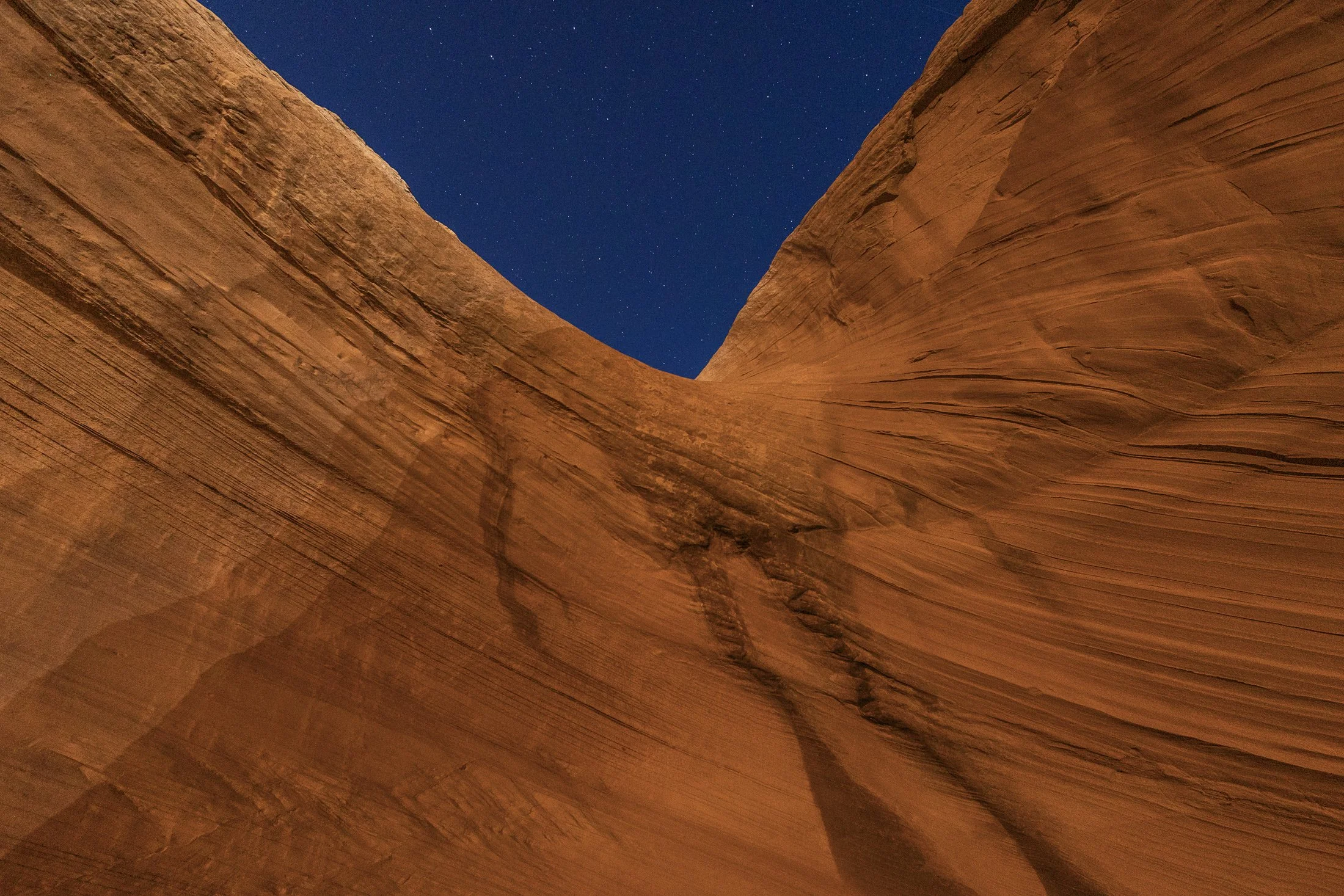
Page, Arizona, near Grand Staircase–Escalante National Monument, is one of my favorite towns in the Southwest. A crossroads between the Grand Canyon, Monument Valley, and Zion National Park, the area has become a vacation destination for desert residents and tourists alike, offering recreational water activities such as charting a boat through the flooded canyons of the man-made Lake Powell.
Lake Powell is a key part of the community which stores and regulates water from the Colorado River for the area as well as powering the Glen Canyon Dam which provides hydroelectric electricity to surrounding area and beyond. The red rock in this area is next to none, with every area offering beautiful trails and hidden views around each corner of the city.
This photo was taken in one such area which was behind a local gas station a mile outside of town. This is a well known sand cave that has gone viral on social media. The feeling of being in this cave is stunning, but I found the warped red rock a much more fascinating feature. Using a long exposure, I used my headlamp to paint the rock against the starry night.

Carl G. Washburne Memorial State Park may be the one of the most scenic stretches of the entire Oregon Coast. Located about 15 miles north of Florence, and only a few miles past Heceta Head Lighthouse (a trail connects the two parks), the surrounding area offers a portal to another world.
The China Creek Trail weaves through coastal forests terminating on the beach, and the picturesque Hobbit Trail, known for its moss-draped trees and old-growth forest, make the hiking here magical.
This photograph was taken moments after sundown, following a chaotic two hours of trying to photography too many areas at once. I used the last remaining daylight to grab this abstract before retiring to my campsite across the main road. The park is a quiet place, unassuming, and it is here that shows Oregon’s true beauty.
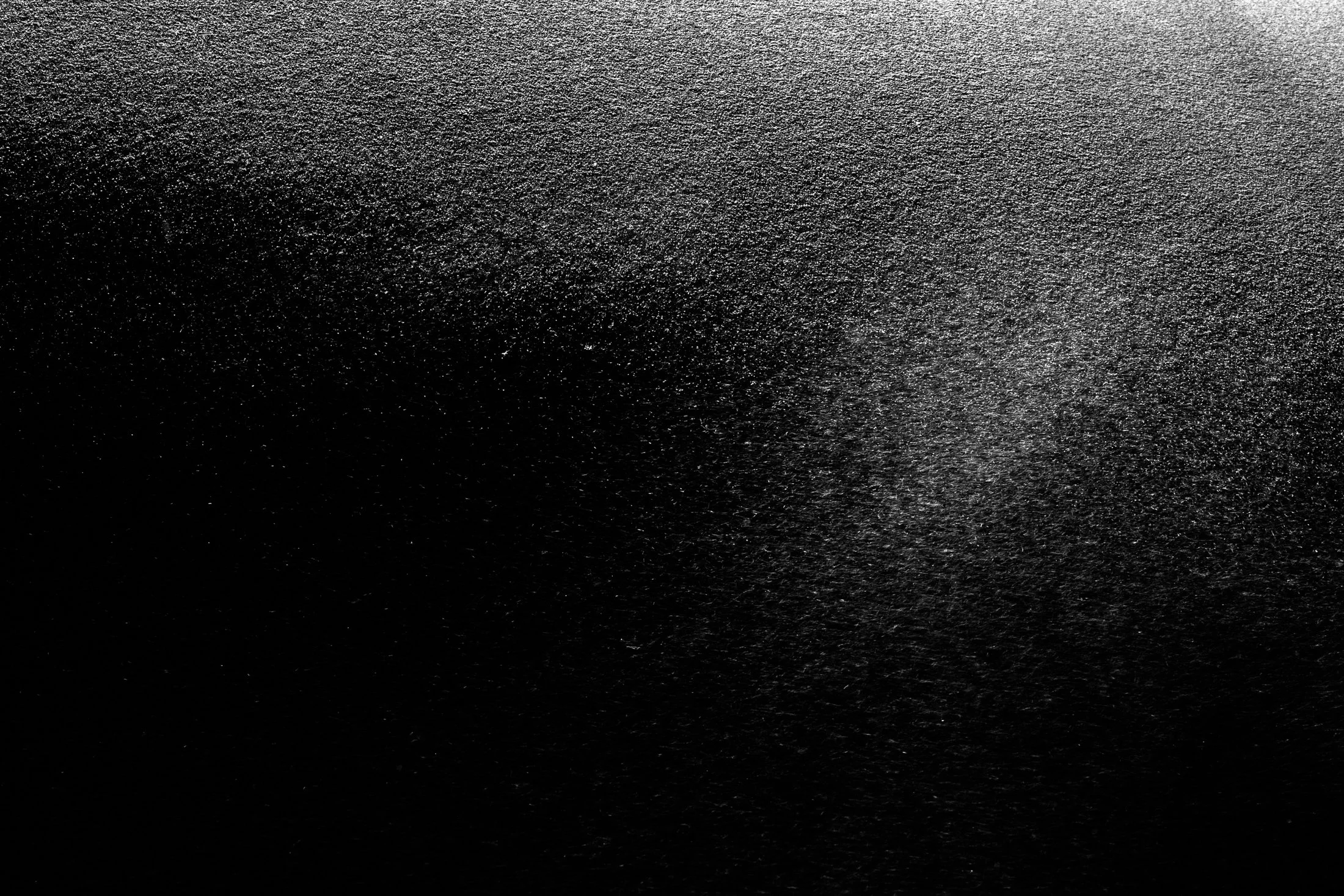
Named the most “Beautiful Place in America” by Good Morning America, Sleeping Bear Dunes National Lakeshore is a Midwest vacation destination located near Empire, Michigan.
The sands at Sleeping Bear are constantly shifting, with the tallest dune exceeding 400 feet. Originating during the last Ice Age, these sands were formed through glaciers grinding down the rock.
Noticing the moving sand while hiking, its flow became a subject onto itself. This photo provides a strange juxtaposition between concrete sand and the windblown abstraction.

Cumberland Island National Seashore is a pristine 18 mile stretch of undeveloped wilderness unique to the East Coast. With this comes an undeveloped beach that provides a stunning juxtaposition to the developed lands north and south of it.
The island has a long history, and was once owned by the Carnegie Family who then dedicated the island to the National Park Service in 1972. The island has faced various threats to its wilderness status and has been defended through the continued efforts of Carol Ruckdeschel, one of the few persons allowed to live on the island.
Through multiple visits to Cumberland, I have always found the sands particularly beautiful, creating myriads of abstract patterns. Each time I visit, I spend time with these Rorschach tests.

Named the most “Beautiful Place in America” by Good Morning America, Sleeping Bear Dunes National Lakeshore is a Midwest vacation destination located near Empire, Michigan.
The sands at Sleeping Bear are constantly shifting, with the tallest dune exceeding 400 feet. Originating during the last Ice Age, these sands were formed through glaciers slow grinding down of the rock.
Noticing the moving sand while hiking, its flow became a subject onto itself. This photo provides a strange juxtaposition between concrete sand and the windblown abstraction.

Olympic National Park protects over 70 miles of coastline making one of the longest protected coastlines in the contiguous United States.
Located near Forks, Washington this coast features a multitude of sea stacks littered a short distance from the beaches. Wildlife is rife with bears occasionally feeding from the rivers emptying out from the rainforest and bald eagles being a frequent sight.
Taken at Mosquito Creek after setting up camp, I descended a steep sand bank via a rope tied to a tree and walked the beach alone at sunset. I set up my tripod and got lost in the waves oscillating beneath my feet.

Cumberland Island National Seashore is a pristine 18 mile stretch of undeveloped wilderness unique to the East Coast.
The island has a long history, and was once owned by the Carnegie Family who then dedicated the island to the National Park Service in 1972. The island has faced various threats to its wilderness status and has been defended through the constant efforts of Carol Ruckdeschel, one of the few persons allowed to live on the island.
This was my first trip on the island, and luckily I was the sole person on this wild beach on an early December morning. The sun rays fanned out on the horizon in a way I had never seen before, but it was this sand bank that made the shot, producing a fascinating abstraction of the landscape.

Carl G. Washburne Memorial State Park may be the one of the most scenic stretches along the entire Oregon Coast. Located about 15 miles north of Florence, and only a few miles past Heceta Head Lighthouse (a trail connects the park), this area offers a portal to another world.
The China Creek Trail which weaves through coastal forests terminating on the beach, and the picturesque Hobbit Trail known for its moss-draped trees and old-growth forest.
This photograph was taken after sundown following a chaotic two hours of photographing. I used the last remaining daylight to grab this abstract before retiring to my campsite across the main road. It is a quiet place, unassuming, and it is here that shows Oregon’s true beauty.
Antelope Canyon, located in northern Arizona within the Navajo Nation right outside the town of Page, is one of the most picturesque slot canyons in the world. Running over 23 miles, it was formed over millennia through consistent erosion, primarily through the actions of flash floods that sculpt the sandstone rock into smooth, undulating forms.
Having traveled to Page numerous times, I had always opted for Buckskin Gulch, another slot canyon in the area that resides on BLM land and does not require a paid tour. My fourth time in the area I decided to partake on a tour and the views did not disappoint. Guided by a local Diné (Navajo) tour guide, I was entreated to various stories of Navajo belief as well as given a private photography tour of the canyons.
The canyons continually conceal and reveal form throughout the day, as the sun follows its path across the sky. My tour followed a relatively short section of the greater Antelope Canyon, and yet I found I could have spent days here and never arrive at the same photo twice. This abstract section reinforces the stunning tonality and color nature creates in the shade of these canyons.