

Spring
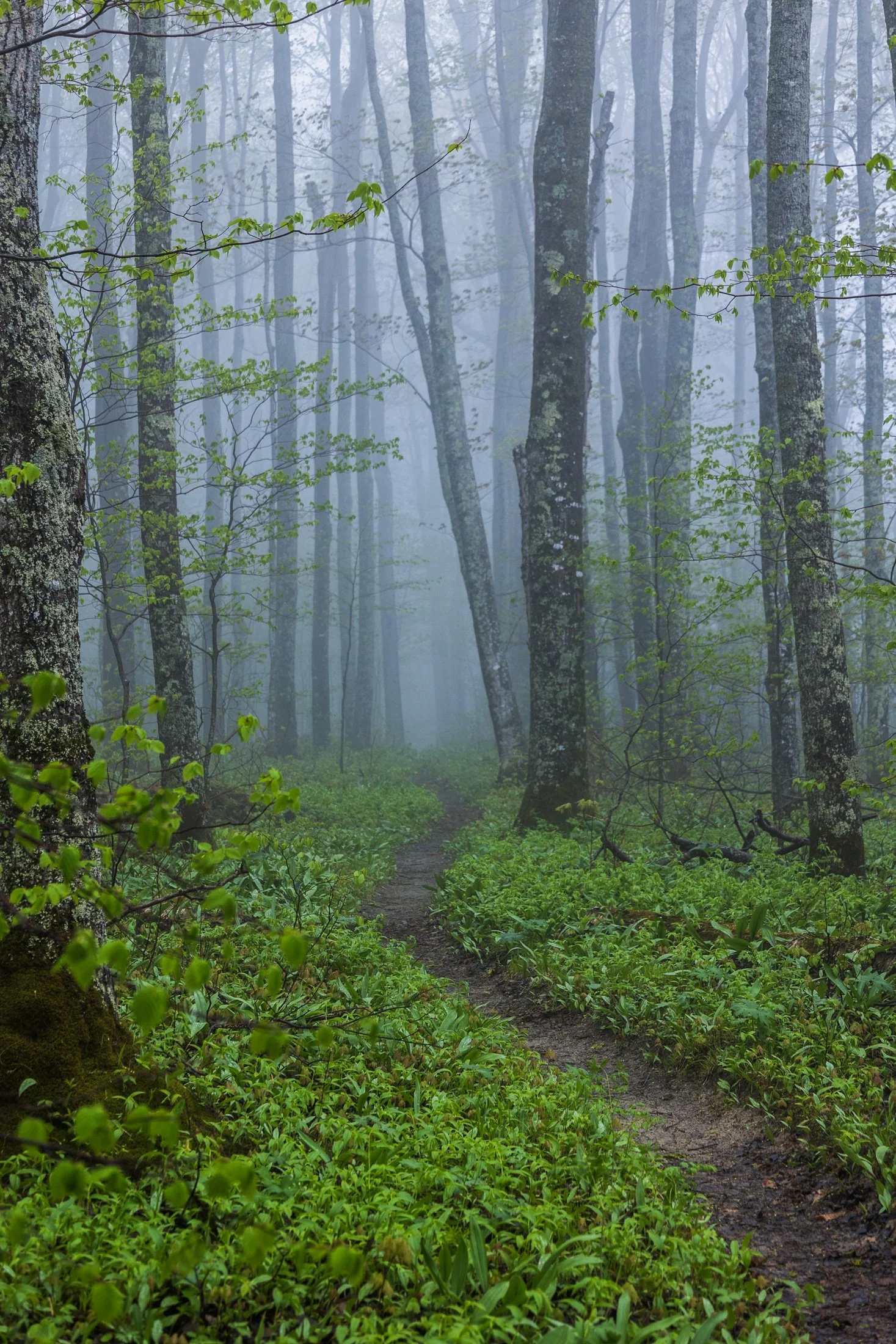
Pictured Rocks National Lakeshore, located near Munising, Michigan, already provides a stunning hiking opportunity for those willing to trek its bluffs, but in the early morning they can often take on a surreal atmosphere as the fog rolls in, transforming the area into a mystic forest.
This fog is often the result of the extremely cold waters of Lake Superior mixing with the warmer air from the land. As the fog rolls in, it muffles sound and adds depth to the already vibrant sandstone cliffs, creating a dramatic backdrop for an already stunning hike.
This particular photo occurred during an 11 mile backpacking trek along the cliffs, providing the one respite from a continuous onslaught of rain throughout the day. The experience of hiking through this atmosphere must be experienced, as this photo barely does it justice, but this winding trail disappearing into the fog serves as a glimpse into its magic.

The escarpment at Pictured Rocks, in this case Chapel Rock, is part of the dramatic sandstone cliff formations that define the Pictured Rocks National Lakeshore along Lake Superior in Michigan’s Upper Peninsula. Chapel Rock itself is a striking feature of this escarpment — a freestanding column of Nape sandstone, shaped by centuries of erosion from wind, water, and ice.
This section of the escarpment showcases the layered and weathered nature of the sandstone, with its rich textures and colors—ranging from golden hues to deep reds and greens—caused by the mineral content in groundwater.
After a long day of backpacking, I set up camp and filtered water from Lake Superior while setting up this shot. I found the rock against the passing storm a particularly interesting composition, showing the fascinating rock that has been a source of wonder for centuries.

The lone white pine on Chapel Rock, located in Pictured Rocks National Lakeshore, is estimated to be about 250 years old. There once was an archway connecting the rock to the mainland but it collapsed in the 1940s.
Chapel Beach and the mouth of Chapel River is adjacent to Chapel Rock, and is popular backcountry campground and hiking destination, offering a secluded beach as well as access to many waterfalls.
After a long day of backpacking, I set up camp and filtered water from Lake Superior while setting up this shot. The mouth of the Chapel River is pictured here, showing the diversity of this picturesque environment that has been a source of wonder for centuries.

Mirror Lake near Granby, Colorado, is a pristine alpine gem nestled in the Indian Peaks Wilderness, offering a breathtaking reflection of the dramatic Lone Eagle Peak.
Accessible via a scenic hike from Monarch Lake, Mirror Lake sits at an elevation of over 10,000 feet and is renowned for its crystal-clear waters and tranquil setting. The lake is a popular destination for backpackers, photographers, and nature lovers seeking a true backcountry experience in the wilderness.
While this was one of the most tiring hikes of my life, due to my added camera weight while backpacking, the trek was more than worth it. For this shot I traversed some large boulders to position myself on a small island to get the right angle for this shot.

Grand Prismatic in Yellowstone National Park is one of the most popular tourist attractions in the park.
Part of the Midway Geyser Basic, this area is fueled by the Yellowstone Caldera, one of the largest volcanic systems in the world.
This turquoise pool is an offshoot of the bigger Grand Prismatic, showcasing the wide open spaces Yellowstone is known for.

Early morning in Yellowstone National Park usually comes with thick fog. This fog is caused by the area’s geothermal activity where the warm moisture arising from the hot springs, geysers, and fumaroles meets the cool air of the early morning.
Orb-weaver spiders, known for their iconic wheel-shaped webs, exist in large numbers in the park, making the temperate geysers their home. Their intricate webs are a work of art, and when glistening in the morning dew, like the one pictured here, they reveal their true beauty.
This one appeared as I strolled the boardwalk of the mud pits in the early morning, and I immediately set up my tripod. This exact imagery is referenced in the allegory of Indra’s Net; the buddhist conception of the world.

Mammoth Hot Springs in Yellowstone National Park is one of the most famous sites in the park. It was the site of the first administrative headquarters of the park as well as being home to Fort Yellowstone, a U.S. Army post established in 1886.
The area is known for the travertine terraces pictured here, formed from rainwater and snowmelt seeping into the underlying magma chamber which heats and dissolves the limestone bringing calcium carbonate to the surface.
The springs form fascinating features, seeming to pour out in every direction. These stair steps, as well as the entire land encompassing Yellowstone, teem with life. This is a perfect exit or entrance to the park depending on which direction you are coming from..
The cornfields near Polo, IL follow twists and turns as the land enters the Driftless Area. It is here where the sinuous and hilly terrain begin to take over. This area, and Illinois in general, is a very prominent agricultural hub for a variety of crops.
Previously a historic route to Galena, this picturesque area was rift with natural prairie prior to its transformation for agricultural purposes, but the beauty still remains.
This area is one I have visited often and will eventually be a part of a series when I capture the right fall photo. The composition of this lone tree set against the distant row of trees in the background shows what is possibly an old boundary tree isolated in a crop field.