

Mountains

Mountains

Mount Hood is an iconic stratovolcano located just outside Portland, Oregon in the Cascade Range. Standing at 11,240 feet, it is the highest peak in Oregon and one of the most recognizable mountains in the Pacific Northwest.
Visible from miles around, the mountain is often in full view from Portland, Oregon, located about 50 miles to the west, and offers up near perfect symmetry and a towering presence.
Only visiting for a day and having the Japanese Gardens planned for the next morning, I had not planned to photograph this day as a stop in Portland requires me to make the rounds at Powell Books, Blue Moon Camera, and Music Millennium, but I after I got back, I decided to walk up the street from my Airbnb at sunset and found myself in the perfect location to capture this magnificent mountain.

A sunset over the Tetons is one of the most stunning views nature has to offer. One reason the Teton Range is famous is due to the dramatic prominence visible from the eastern side, which rises sharply from 4,000 to 7,000 feet above the valley floor.
Aerial debris will often obscure the Tetons during sunset leading to a fascinating ghostly form on the landscape, but when the air is clear the sunsets are incredible, accentuating the fascinating form of one of America’s greatest mountain range.
The mosquitos were in full force as I rushed to set up my tripod shortly after arriving at Grand Teton. I rented a rustic cabin (offered at the Grand Teton campsite), consisting of two unfinished cots and a fire pit. I drove down to the lake and set up this shot while providing a perfect meal for the skeeters.

The Grand Teton mountain range is one of the most breathtaking views in the contiguous United States. The main faulting that formed the range occurred around 10 million years ago during the Miocene epoch.
Since then, the range has continued to rise while the Jackson Hole basin has subsided, deepening the valley. This valley has become an idyllic vacation spot for many tourists during the summer months.
The road leading from the east to Grand Teton National Park is a one of the most spectacular ways to be introduced to the Tetons, and this one point perspective on US Route 26 provided the perfect example.

Mirror Lake near Granby, Colorado, is a pristine alpine gem nestled in the Indian Peaks Wilderness, offering a breathtaking reflection of the dramatic Lone Eagle Peak.
Accessible via a scenic hike from Monarch Lake, Mirror Lake sits at an elevation of over 10,000 feet and is renowned for its crystal-clear waters and tranquil setting. The lake is a popular destination for backpackers, photographers, and nature lovers seeking a true backcountry experience in the wilderness.
While this was one of the most tiring hikes of my life, due to my added camera weight while backpacking, the trek was more than worth it. For this shot I traversed some large boulders to position myself on a small island to get the right angle for this shot.

Lone Eagle Peak is a marvel among Colorado’s already stunning collection of mountains peaks.
Named for Charles Lindbergh, the “Lone Eagle”, after his historic transcontinental flight, the mountain is tucked in the Indian Peaks Wilderness and requires at 15 mile hike to reach base where two mountain lakes sit.
This was captured at one of the most tiring moments in my life; 15 miles up the mountain with 50 lbs of camping and camera gear. I now travel lighter when climbing mountains. I arrived at camp completely spent, and struggled to make the effort to grab this shot as the light faded from the mountain.

Lone Eagle Peak is a marvel among Colorado’s already stunning collection of mountains peaks.
Named for Charles Lindbergh, the “Lone Eagle”, after his historic transcontinental flight, the mountain is tucked in the Indian Peaks Wilderness and requires at 15 mile hike to reach base where two mountain lakes sit.
Having acquired an overnight permit six months earlier (all of which sold out in thirty seconds), I photographed this after a particularly grueling hike, camping and camera gear in tow. But being able to photograph this Grinch-like peak with the right gear made it all worth it.

It’s very difficult to explain the expanse and epic nature of Glacier National Park to those who have not been, and even more difficult to encapsulate it in a single photograph.
Glacier’s famous Going-To-The-Sun-Road is a marvel of American ingenuity and engineering and driving it is proof. Construction began in 1921 and finished in 1932, bringing with it tourism to the area.
While driving this majestic road, I found it difficult to decide where to stop. I was particularly enamored by the West Tunnel, and upon exiting the tunnel, I found this view looking out towards Mt. Oberlin. The scale was absolutely stunning and required multiple photos to stitch the entire view.

The Indian Peaks Wilderness is a protected wilderness area in north-central Colorado, encompassing approximately 73,931 acres within the Arapaho and Roosevelt National Forests, as well as a portion of Rocky Mountain National Park.
Established by Congress in 1978, it offers a pristine natural environment characterized by rugged granite peaks, glacially carved valleys, and over 50 alpine lakes.
Hiking up to Lone Eagle Peak was one of the most tiring hike of my life, due to my added camera weight while backpacking, but the trek was more than worth it. This was taken right as we were leaving the area, and luckily I turned around to see this composition encapsulating all that makes this wilderness truly unique.

Hiking the Cascade Canyon Trial in Grand Teton National Park is nothing short of epic. The sheer size of these mountains makes one feel very, very small. The trail runs along Cascade Creek where one can see various wildlife such as moose, bear, and deer.
Snowmelt in the spring and early summer provides vital water for rivers and streams in the Jackson Hole valley and surrounding areas. The Snake River, which runs through the region, is largely fed by snowmelt from the Grand Teton and surrounding mountains.
This shot was an attempt to show the sheer scale of Tetons as I had tried to show a moose against the backdrop and it was a mere speck in the foreground and yet this still does not do justice to the scale of these mountains.

Mirror Lake near Granby, Colorado, is a pristine alpine gem nestled in the Indian Peaks Wilderness, offering a breathtaking reflection of the dramatic Lone Eagle Peak.
Accessible via a scenic hike from Monarch Lake, Mirror Lake sits at an elevation of over 10,000 feet and is renowned for its crystal-clear waters and tranquil setting. The lake is a popular destination for backpackers, photographers, and nature lovers seeking a true backcountry experience in the wilderness.
While this was one of the most tiring hikes of my life, due to my added camera weight while backpacking, the trek was more than worth it. After making camp the previous night, this day involved traversing the surrounding area. I found this view summed up the vibe of this surreal setting.

Hidden Falls of Grand Teton National Park is one of the first things you may miss after jumping on Inspiration Point Trailhead after a ferry ride across Jenny Lake as the trail is not one that stands out.
This area is immensely popular in the summer as the Jenny Lake Trail intersects with it leading to Inspiration Point. This lookout point looks out over Jenny Lake and the surrounding distances that seem to continue on forever.
This waterfall was in full force due to the snowmelt from the winter and to get this particular vantage point involved a bit of scrambling. In the back corner you can see the Teton range extending further into the park.
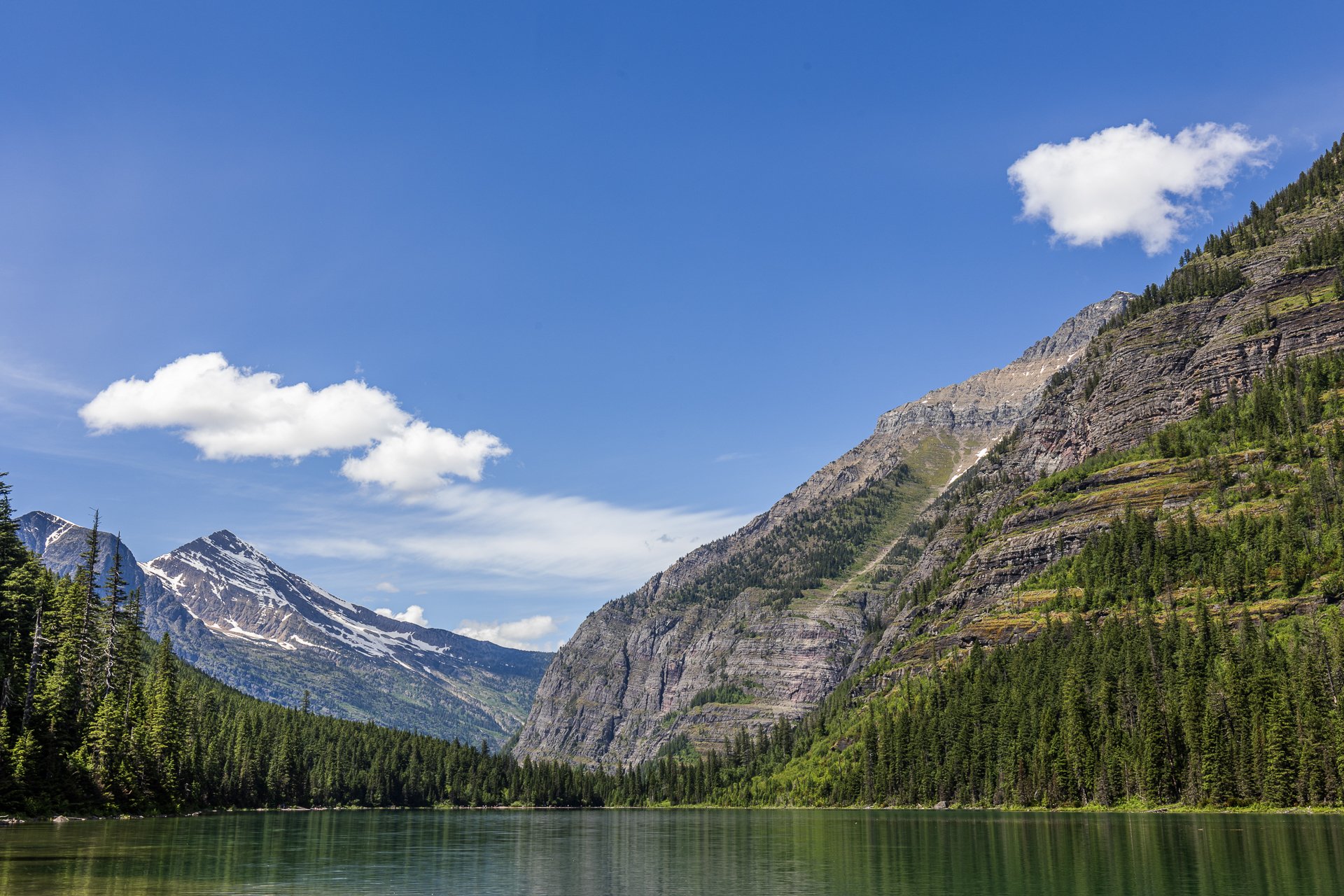
It’s very difficult to explain the expanse and epic nature of Glacier National Park to those who have not been, and even more difficult to encapsulate it in a photograph.
Avalanche Lake is one of the most popular hikes in the park, at 4.5 miles round trip, where you might have the chance to glimpse grizzly bears in their natural habitat. Named for the Avalanche Basin the lake sits in, avalanches are common in the winter and gives way to stunning view in the summer.
This photo required maneuvering into the wetlands, sacrificing a bit of dryness in my boots, and positioning my tripod on some rocks. When everything was set up, I was able to take in the magic of this area.

Grand Teton National Park is one of the most stunning mountain ranges in America. The fact that it is located right near Yellowstone makes these two National Parks a one-two knockout.
The Teton Range are prone to strong winds, especially in the spring and fall. These winds often create wispy cirrus clouds accenting the beauty of this staggering mountain range.
I found this scene after showing up to the National Park rather late after a long drive across Wyoming. These peaks are some of the most magnificent America has to offer, and their sheer prominence is a sight to behold.
Mount Ellinor is part of the southeastern Olympic Mountains in western Washington state. The mountain is a beautiful one and shows clear signs of past glaciers.
During the ice ages, glaciers carved out the valleys and sharpened the ridges around the area. The views of Lake Cushman become even more amazing when you realize the whole area was shaped by ice and water
This particular photo was taken right after reaching the summit. On the way down I came across curious scene when turning a corner. The boots sticking out next to the owners dog felt like something out of a Dr. Seuss book. This quick snap reminded me dogs hike too.