

Swamps

Swamps
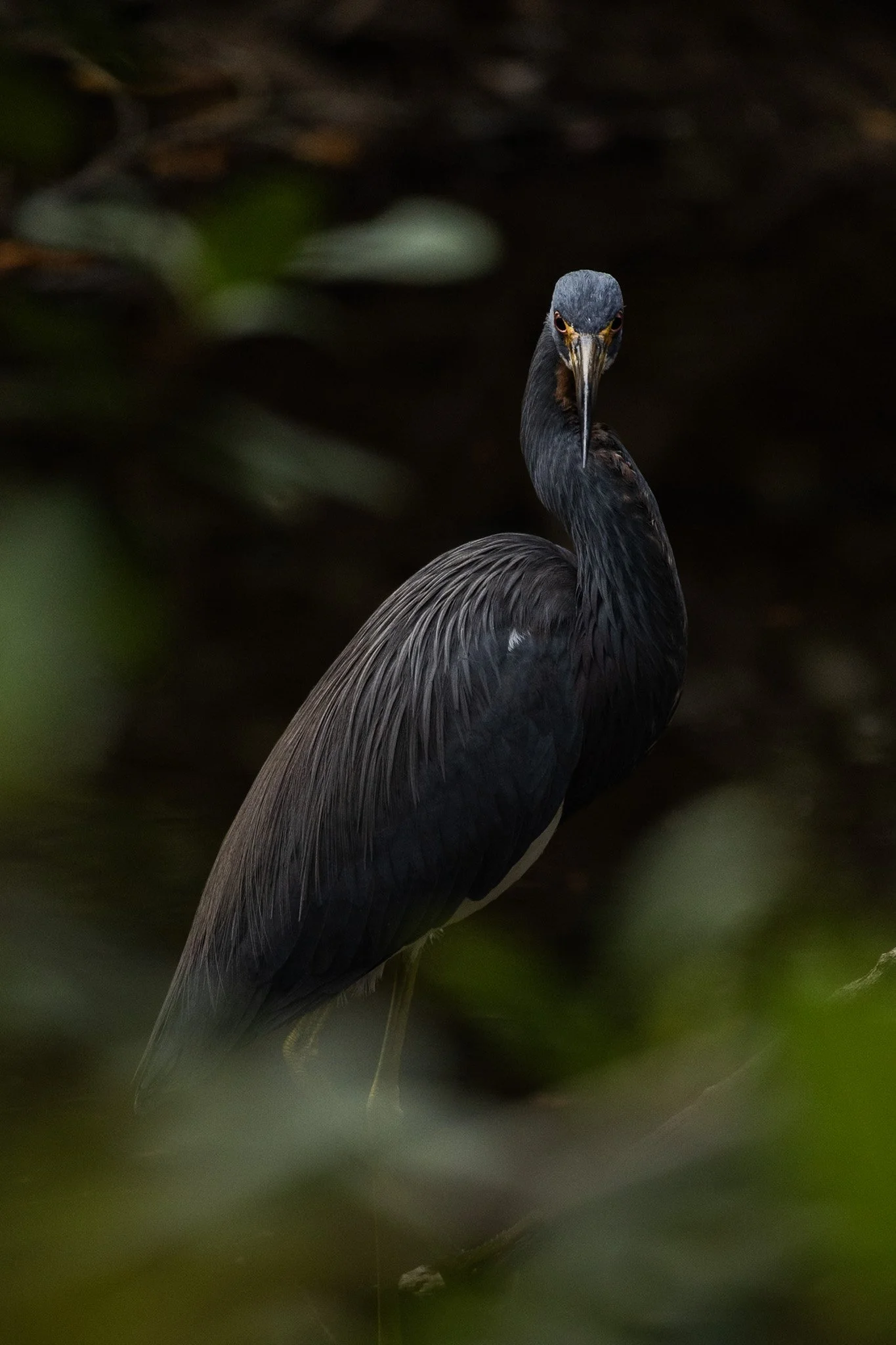
The Tricolored Heron is known for its vibrant plumage, with dark shades of blue, purple. It is an expert hunter, often employing a unique technique where it attracts prey by creating a contrast with its bright chest feathers in the water.
They are social creatures, often found hunting in groups and nesting in colonies with other wading birds. During breeding season, their plumage becomes even more colorful with long, elegant plumes on their heads and necks.
This specific heron was found on a lone dirt road surrounded by trees and swamp on each side. The birds here seem to enjoy a secluded paradise meandering among the Everglades swampy foliage. This guy noticed my lens and gave me a beautiful glare during a moment of soft light creeping through the shadowy of the swamp.

Cumberland Island National Seashore, located near St. Marys, Georgia, is a pristine 18 mile stretch of undeveloped wilderness unique to the East Coast. The island is known for its feral horses, possibly left over from the Spaniards during the 1700s.
The island has a long history, and was once owned by the Carnegie Family who then dedicated the island to the National Park Service in 1972. The island has faced various threats to its wilderness status over the years and has been defended through the continuous efforts of Carol Ruckdeschel, one of the few persons allowed to live on the island.
I arrived at Plum Orchard Mansion for a tour of the defunct Carnegie mansion dedicated in 1898. The area is frequented by the wild horses (technically feral) of the island. I was lucky enough to capture this black stallion bathed in light, highlighting its beauty if not also its complicated existence.

Cumberland Island National Seashore is a pristine 18 mile stretch of undeveloped wilderness unique to the East Coast.
The island has a long history, and was once owned by the Carnegie Family who then dedicated the island to the National Park Service in 1972. The island has faced various threats to its wilderness status and has been defended through the continued efforts of Carol Ruckdeschel, one of the few persons allowed to live on the island.
This was the view at my backcountry campsite at the north end of the island where the bay sat still as birds and the rare dolphin would pass by. This was the beautiful end to a long 10 mile hike.

Congaree National Park in South Carolina is the largest intact expanse of old growth bottomland hardwood forest remaining in the southeastern United States. The Congaree River floodplain had a rich history including being a prominent area for bootleggers to hide their wares during the prohibition era. Authorities would be hard pressed to find the spirits stored in the recesses of the swamp land where the locals knew like the back of their hand.
Congaree is a mysterious land and one I would like to come back and kayak through as the boardwalks were completely flooded when I arrived. While this prevented me from exploring much of it, it was a prime example of the beauty of the area, one which cannot be tamed.
The best angle to capture this flooded boardwalk required the sacrifice of the dryness of my boots. I needed to dry them out before the next morning’s backpacking trip so I blasted the heat in my car with my shoes next to the vent while I sat in 90 degree bumper to bumper traffic. All worth it.

Mammoth Cave National Park, located in south central Kentucky, is the largest cave system in the world. The tunnels of Mammoth cave are what give it its name, with some chambers the size of large subway systems.
The cave has been a source of tourism in the United States all the way back to the 1800s with enslaved men being some of the first tour guides and explorers of the cave, and the history of Mammoth Cave is entwined with African American history.
I took this photo after an amazing tour of the cave and caught the guard on his way out. I’ve always found the entrance unassuming without a hint as to what lies in wait but 300 feet further.

Congaree National Park in South Carolina is the largest intact expanse of old growth bottomland hardwood forest remaining in the southeastern United States.
The Congaree River floodplain had a rich history with bootlegging during the prohibition era, where authorities would be hard pressed to find the spirits stored in the recesses of the swamp land that locals knew well.
I spent one night at Congaree, and it has stuck in my mind since. Tho capture this photo I needed to creep further onto the flooded boardwalk to get the right angle resulting in water flooded my boots. It took great effort to dry them out for my backpacking trip the following morning.
The Great Egret, often referred to as the white heron, is a majestic bird known for its all-white plumage and long, graceful neck. It is an excellent hunter, often seen standing motionless in shallow waters or slowly wading through wetlands in search of fish, amphibians, and small reptiles.
During the breeding season, egrets develop long, delicate plumes on their backs, which were once highly prized in the fashion industry, leading to significant hunting pressure in the late 19th century.
This specific individual waded slowly through in the lowlands of the Everglades as I waited to frame its graceful profile against the swampy abstraction behind it. These birds find a secluded paradise in the Everglades, an area that has been under a constant state of threat since its inception.