

Buttes | Hoodoos

Buttes|Hoodoos
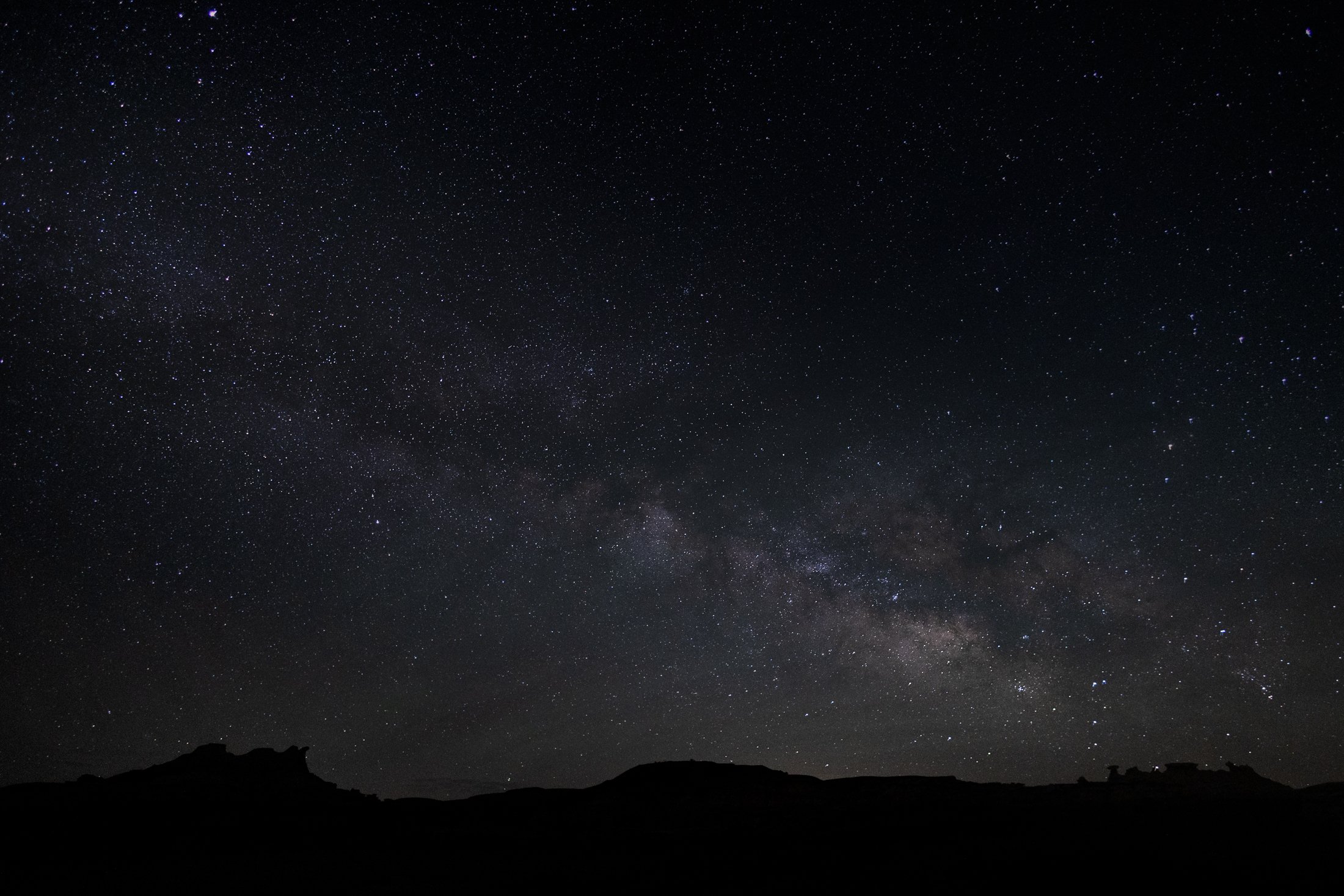
The Bisti Badlands are a remote and alien world in northwest New Mexico situated in the Bisti/De-Na-Zin Wilderness, an area protected by the Bureau of Land Management.
The name comes from the Dinë (Navajo) word “Bistahi” translating roughly to “among the adobe formations”. The wind-formed hoodoos in this region are numerous leading to bizarre formations, varied colors, and precariously balanced rocks. The area doubles as a designated dark sky territory providing an unpolluted night sky.
This was my second time visiting this desolate world, and this time I backpacked in at sunset and spent the entire night photographing around camp, using my headlamp to paint the rocks. Finally, late into the night, the Milky Way became visible with the naked eye, and this silhouette of the landscape perfectly framed our beautiful galaxy. It was a stunning sight.

Standing at 867 feet tall, Devil’s Tower, located in eastern Wyoming, has been a sacred site for Native Americans for centuries as well as being featured prominently in “ Close Encounters of the Third Kind” (1977).
One narrative surrounding its formation involves two girls attempting to escape a large bear by scurrying up a rock formation. The Great Spirit, seeing their plight, rose the rock high into the air to protect the. The distinctive basalt columns were formed from the claws of this bear’s attempt to reach them.
After renting a cabin at the nearby KOA, where “Close Encounters of the Third Kind” is shown every night in front of the monolith, I drove to the southern side at sunset to capture the light slowly fading from the tower. While standing there I could only think one thought; the energy of this land is palpable.

Iconic, religious, Hollywood-graced, the West Mitten Butte watches over the land of Monument Valley, a stunning area residing along the Utah-Arizona border.
These buttes hold major religious significance for the Navajo. Legend holds they are the remains of great religious deities. Filmmaker John Ford found his home in Monument Valley, countless westerns there with John Wayne, with the Mittens featuring prominently in such films as “The Searchers” (1956) and have now become icons of the American West.
Monument Valley maintains one of the best campsites I’ve ever had the pleasure of camping at, and it is a perfect one for photographing the Mittens. The campsite sits atop a sand band looking straight out towards The Mittens, evoking a drive-in movie theater, replacing the screen with one of the best views in the West.

The Bisti Badlands are a remote and alien world in northwest New Mexico located in the Bisti/De-Na-Zin Wilderness, protected by the Bureau of Land Management.
Unlike more developed national parks, the Bisti Badlands are largely untouched and offer a sense of solitude. There are no marked trails or facilities, so visitors must navigate the land carefully so as not to get lost in this maze of hoodoos.
Backpacking into the middle of the area, I set up a tripod and started light painting. Requiring a fifteen second exposure and precise painting with my headlamp, getting this lit evenly was a daunting task. Next time I’ll bring a flash.

The Bisti Badlands are a remote and alien world in northwest New Mexico located in the Bisti/De-Na-Zin Wilderness, protected by the Bureau of Land Management.
The name comes from the Dinë (Navajo) word “Bistahi” translating roughly to “among the adobe formations”. The wind-formed hoodoos in this region are numerous leading to bizarre formations, varied colors, and precariously balanced rocks.
Backpacking into the desolate desert the previous night, a place where no trail exits, I woke up early the next morning to capture the morning light. This land lives beautiful isolation, undisturbed, as the elements continue their magnificent sculpting each day.

Originally covered by oceans and rivers, Monument Valley is a testament to time. Located on the Colorado Plateau near the Arizona-Utah Border, the valley displays the wondrous effects of weathering and erosion.
With the softer rock being eaten away over time by the elements, the harder rock is left exposed in curious and awe-inspiring formations that have religious significance for the Diné (Navajo) People and iconic significance for the American West.
Pictured here is “Sentinel Rock” profiled with an edge light from the setting sun. I was able to capture this photo right from my campsite, one of the most beautiful I’ve ever camped at, which also sits facing The Mittens.
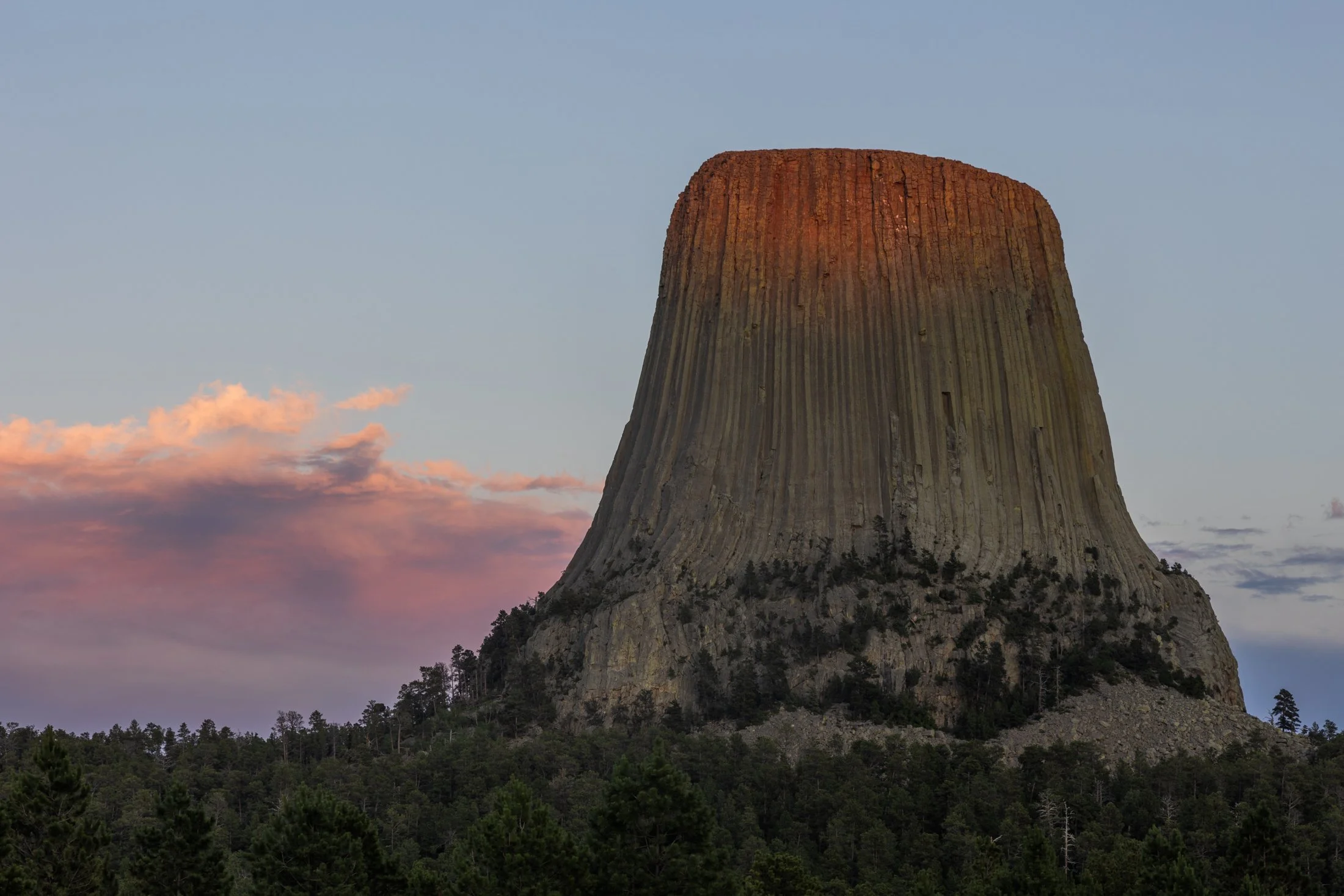
Standing at 867 feet tall, Devil’s Tower, located in eastern Wyoming, has been a sacred site for Native Americans for centuries as well as being featured prominently in “ Close Encounters of the Third Kind” (1977).
The Lakota tribe refers to it as Mato Tipila, roughly translating to “Bear Lodge”. One narrative surrounding its formation involves two girls attempting to escape a large bear by scurrying up a rock formation. The Great Spirit, seeing their plight, rose the rock high into the air to protect them. As the bear attempted to reach them, he clawed the sides of the rock, which formed the basalt columns seen today.
After renting a cabin at the nearby KOA, where “Close Encounters of the Third Kind” is shown every night in front of the monolith, I drove to the southern side at sunset to capture the light slowly fading from the tower. While standing there I could only think one thought; the energy of this land is palpable.

Iconic, religious, Hollywood-graced, the East and West Mitten Buttes tower over the landscape at Monument Valley along the Utah-Arizona border.
These buttes hold religious significance for the Navajo People with legend holding that they are the remains of great religious deities. Later John Ford found his home in Monument Valley and made countless westerns there with John Wayne, with the Mittens featuring prominently in films such as “The Searchers” (1956).
Monument Valley maintains one of the best campsites I’ve ever had the pleasure of camping at. It sits atop a sand band looking out towards The Mittens, evoking a drive-in movie theater, replacing the screen with one of the best views in the West. I later focused my efforts on the West Mitten at sunset.
The Toadstool Hoodoos, located outside of Kanab, Utah and Page, Arizona, are part of the greater Grand Staircase-Escalante National Monument. The trail is unassuming, located at a small turnoff on Highway 89. The trail to the hoodoos meanders through the valleys of small eroded plateaus with large amounts of scree covering the area.
These unique formations find their creation from the Dakota Sandstone boulders that sit atop the Entrada Sandstone pedestals. Once the softer Entrada Sandstone erodes, the Dakota Sandstone resides leaving a cap, like a mushroom, on top.
This photo was taken after a group of friends and I decided to stop off here for sunset following a particularly exhausting 8 mile hike through Buckskin Gulch. With the setting sun providing enough darkness for me to use my off camera flash, I channeled my inner studio photographer and directed my friend where to hold the flash to best reveal its form, giving rise to magnificent colors and striations against the purple hue of the setting sun.