

Blues

The dunes in and around Coral Pink Sand Dunes State Park, located on the border of Utah, are primarily shaped by wind and erosion, which picks up and transports sand particles across the valley floor. Sediment from surrounding mountains supplies the sand forming these natural features.
The area is known for frequent ATV usage, allowing visitors to traverse the dune system in style. Sandboarding is also available for purchase from the state park, but be careful, as these boards gain some speed especially on the larger dunes.
This was my third visit to the state park, and there’s a reason I keep coming back. The campsite is phenomenal, allowing access to the dune system from the campground. I grabbed this shot right before my friend’s footprints ruined the pristine, untouched dune. This was the first stop on my most recent trip to the Kanab area, with the next stop being the dangerously beautiful Buckskin Gulch.

The escarpment at Pictured Rocks, in this case Chapel Rock, is part of the dramatic sandstone cliff formations that define the Pictured Rocks National Lakeshore along Lake Superior in Michigan’s Upper Peninsula. Chapel Rock itself is a striking feature of this escarpment — a freestanding column of Nape sandstone, shaped by centuries of erosion from wind, water, and ice.
This section of the escarpment showcases the layered and weathered nature of the sandstone, with its rich textures and colors—ranging from golden hues to deep reds and greens—caused by the mineral content in groundwater.
After a long day of backpacking, I set up camp and filtered water from Lake Superior while setting up this shot. I found the rock against the passing storm a particularly interesting composition, showing the fascinating rock that has been a source of wonder for centuries.

Art on the MART is a large-scale public art installation in Chicago that transforms the façade of the Merchandise Mart building into a digital canvas. Launched in 2018, it features nightly projections of contemporary art across 2.5 acres of the building’s river-facing side, making it the largest digital art projection in the world.
The installation showcases work from local, national, and international artists, often in collaboration with cultural institutions like the Art Institute of Chicago and the Chicago Symphony Orchestra. The projections are free and open to the public, and they typically run from spring through fall.
This offered me a secluded area to shoot, away from the hustle and bustle of the main viewing platform along the river, and provided the perfect vantage point to show off all that makes Chicago great, especially its world class architecture.

Carl G. Washburne Memorial State Park may be the one of the most scenic stretches of the entire Oregon Coast. Located about 15 miles north of Florence, and only a few miles past Heceta Head Lighthouse (a trail connects the two parks), the surrounding area offers a portal to another world.
The China Creek Trail weaves through coastal forests terminating on the beach, and the picturesque Hobbit Trail, known for its moss-draped trees and old-growth forest, make the hiking here magical.
This photograph was taken moments after sundown, following a chaotic two hours of trying to photography too many areas at once. I used the last remaining daylight to grab this abstract before retiring to my campsite across the main road. The park is a quiet place, unassuming, and it is here that shows Oregon’s true beauty.

Highway 1 through Big Sur, California, is one of the most iconic drives in the world, offering dramatic views of the rugged Californian coast. Known for its winding road, narrow bridges, and steep cliffs, this section of highway hugs the coastline for nearly 90 miles before terminating just south of San Francisco.
Originally completed in the 1930s using convict labor and WPA funding, the road has been repeatedly closed and rebuilt due to landslides and erosion common in the area. Despite its challenges, Highway 1 remains a vital lifeline for Big Sur’s small communities and tourism-based economy.
Driving the One is something that cannot be described and must be experienced. This shot was accomplished by holding the camera out the driver’s side window, making sure I had a high shutter speed to stop motion, and trying to angle it in a way that might lead to a good composition. It was a lucky shot and not a great way to photograph, safety first.

The Heceta Head Lighthouse, built in 1894, is one of the most photographed lighthouses in Oregon, if not the United States, and remains operational as a navigational aid. One of the original light keepers' houses still stands nearby and now serves as a bed-and-breakfast.
The wildlife here is rife with sea lions, harbor seals, and migrating gray whales often seen from the headland, especially during the spring and winter migration seasons, as well as numerous seabirds who make the cliffs their home.
The waves that slam into the cliffs on a windy day, like the one captured here, shows the sheer force of nature at work. I took this as the mist continually covered my lens, requiring me to wipe it between each exposure as I waited for the rogue wave to strike.

The Palouse region, located in southeastern Washington and extending into portions of Idaho and Oregon, was originally home to the Palus people, historically known for breeding strong horses, but the U.S. government did not acknowledge them as a distinct tribe in the late 1800s as settlers arrived under the Homestead Act.
Indigenous communities were displaced, and the land was drastically reshaped by agriculture. The region’s deep loess soil and steep terrain led farmers to adopt contour plowing, giving the fields their signature flowing appearance.
Traveling through the Palouse region was an out of body experience. The word space took on a new meaning as I meandered through its rolling hills. This scene, found on one of the many gravel roads winding through the area, seemed to recall Bliss, photographed by Charles O’Rear in California.
Maybe Microsoft needs a new screensaver…
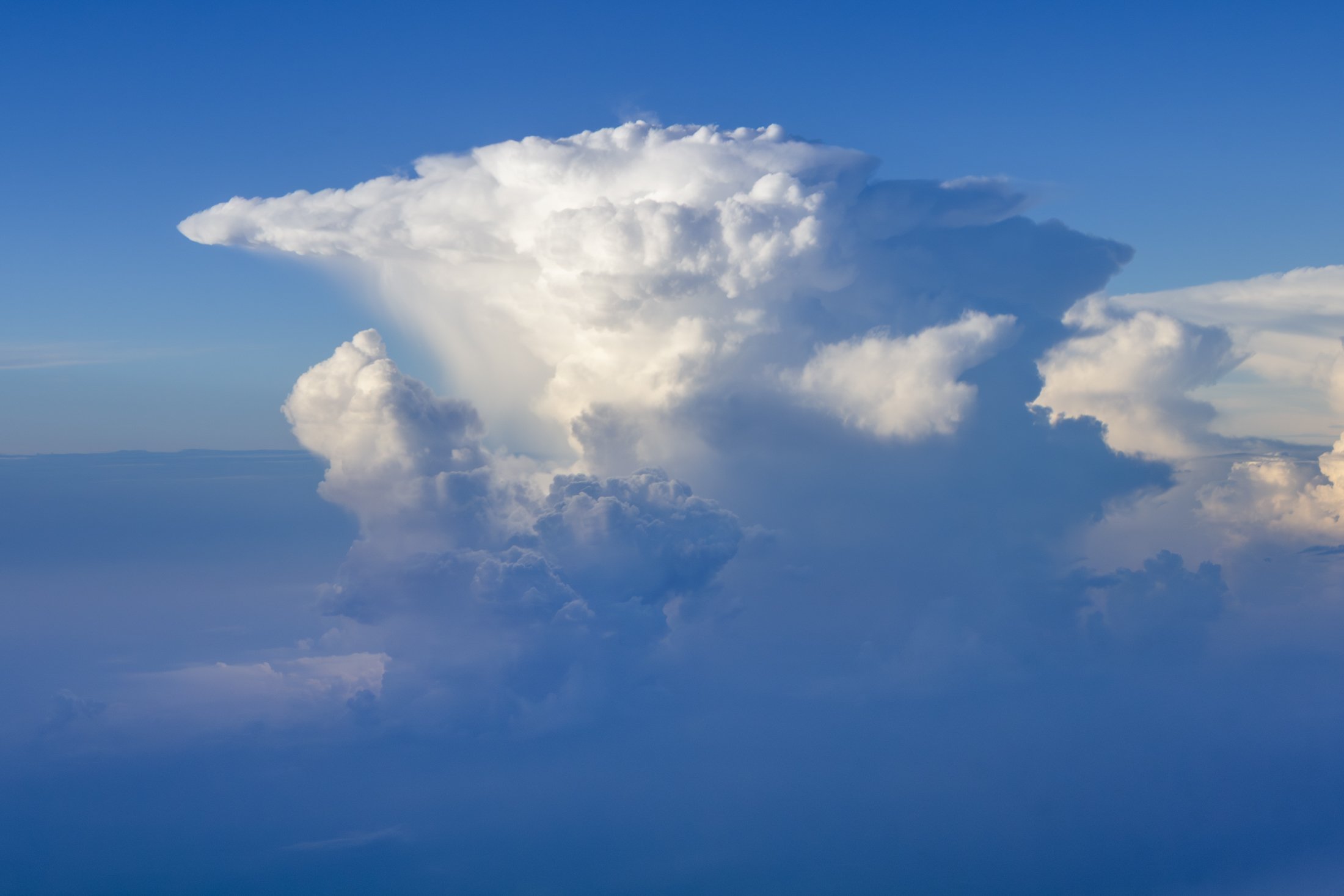
Cumulonimbus clouds are among the most powerful and visually striking clouds in the atmosphere. The only clouds that produce thunder and lightning, these towering giants can reach heights of over 12 miles.
One of the most distinctive features of a mature cumulonimbus cloud is its anvil-shaped top such as the one seen here, which forms when the cloud's upward growth is halted by the tropopause, causing the upper part to spread out horizontally.
I was lucky enough to witness this fascinating formation while taking off from Chicago at the tail end of a storm. The sheer size was daunting, and the setting sun raked against the cloud perfectly. This is an alternate to the black and white version, as I found both offered something different.
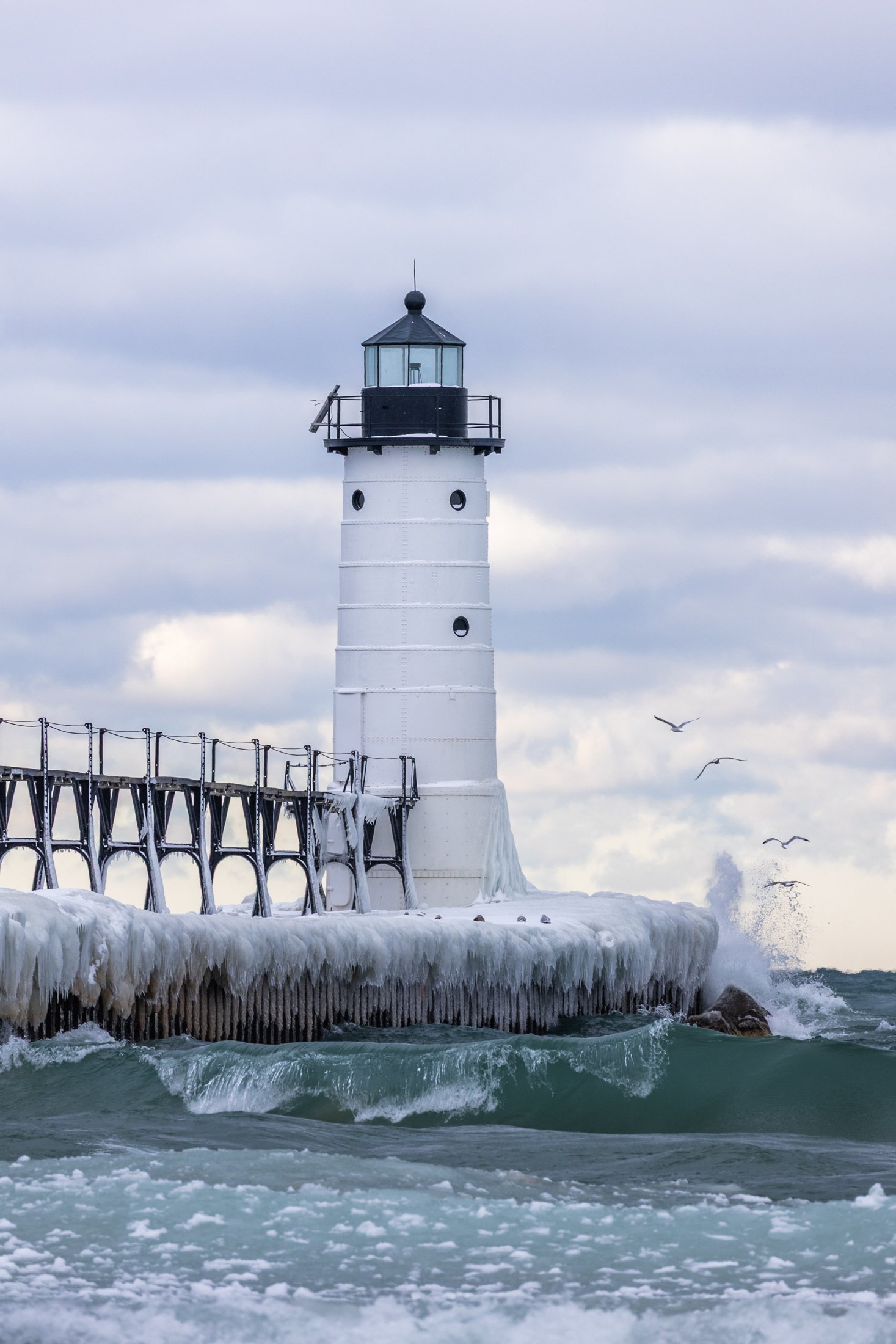
The Manistee North Pier Lighthouse, located in Manistee, Michigan, is as picturesque as any lighthouse can be.
Constructed in 1870, the wooden lighthouse was changed to steel in 1927, providing an important means of safely guiding ships in the lumber industry during the end of the 19th century.
This was my second visit to the Manistee Lighthouse, with both events being particularly cold days. This day just happened to be my birthday. The wind was fierce, and after setting up the shot, I was lucky enough to have some avian tourists enter my frame.

The Palouse region, located in southeastern Washington, extending into Idaho and Oregon was originally home to the Palus people. The area was transformed in the 1800s as settlers arrived under the Homestead Act.
Indigenous communities were displaced, and the land was reshaped by agriculture. The region’s deep loess soil and steep terrain led farmers to adopt contour plowing, giving the fields their signature flowing appearance.
Traveling through the Palouse region was an out of body experience. The word space takes on a new meaning as you meander through its rolling hills. The vibrant colors and different stages of tilling make each turn unique. Finding the form and color of this hillside fascinating, I decided it was worthy of its own frame.

Haystack Rock near Pacific City, also known as Chief Kiwanda Rock, is an enormous sea stack located just offshore from Cape Kiwanda in Pacific City, Oregon.
Standing approximately 327 feet, it is one of the tallest sea stacks on the Oregon coast, even taller than the more famous Haystack Rock in Cannon Beach.
This was taken during a bustling evening near the Pelican Brewing Company, where patrons dined as the light broke through at golden hour, giving way to these stunning clouds behind the sea stack, casting its true form in silhouette. And if you look closely you’ll see the staggering amount of birds which call it home.

Crater Lake, located in Southern Oregon, feels too big for a single frame. I struggled to fathom its size while I stared at it. And the blue reflected by that lake one of the most saturated blues I’ve ever seen in nature.
This deep blue comes a myriad of factors but, two big ones are the fact that the lake’s source is almost entirely snowfall and rainfall leading to very little sediment. The other factor is how deep the lake is. Crater Lake is a whopping 1,943 feet, leading to more pronounced absorption of wavelengths other than blue.
I felt it deserved its own frame.

Crater Lake, located in Southern Oregon, in my humble opinion, is too big for a single frame—plain and simple. But the blue reflected back from the water it contains might be the purest saturation of blue I’ve ever seen in nature.
This deep blue comes a myriad of factors but, two big ones are the fact that the lake’s source is almost entirely snowfall and rainfall leading to very little sediment. The other factor is how deep the lake is. Crater Lake is a whopping 1,943 feet, leading to more pronounced absorption of wavelengths other than blue.
I arrived at Crater Lake a week after the road to the lake had been opened and the remnants of the snow were everywhere, a fact that altered my camping plans as the campground was deserted, but the two hours I spent at the lake were magical.

Wizard Island is a volcanic cinder cone located within Crater Lake National Park. Crater Lake is the result of the eruption of an ancient volcanic named Mount Mazama, which erupted 7,700 years ago.
This eruption is what formed the caldera that is Crater Lake with Wizard island appeared later from subsequent lava flows into the lake. Visitors can even take seasonal boat tours to the island and hike to the summit.
Planning to camp for the night at Crater Lake, I showed up to a completely empty and snow-filled campground, leaving me to drive up to the lake, grab some photos, and move on to the next town. But that two hours I spend there were awe-inspiring. The blue in that lake is unlike any other found in nature.

Door County is a travel destination for many a midwesterner. The area is known for its limestone cliffs, wineries, shops, and much more.
The limestone bluffs surrounding the region are the remnants of the Niagara Escarpment, a 1000-mile long slope of rock from 400-500 million years ago that resists the faster erosion of other type of rocks such as sandstone.
This shot reminded me once again of all the things that make the Midwest truly unique.
The South Coast Wilderness Trail is a stunning, rugged, and truly wild 17 mile one-way hike through Olympic National Park. One of the last undeveloped coastlines in the contiguous United States, Olympic’s protection status ensures native species like sea otters, bald eagles, bears, and migrating whales will continue to thrive in this pristine wilderness.
Switching between stretches of picturesque coast and dense rainforest, the trek (which is at sea level) entails 2,000 feet in elevation change, due to the use of ladders and ropes to maneuver up and down coastal embankments.
This was one such area on my backpacking trip where the trail climbed several hundred feet following a rope climb from the beach. The blue of this area of the Pacific is stunning, especially contrasted with the lush greenery of Olympic’s rainforest.