

Winter
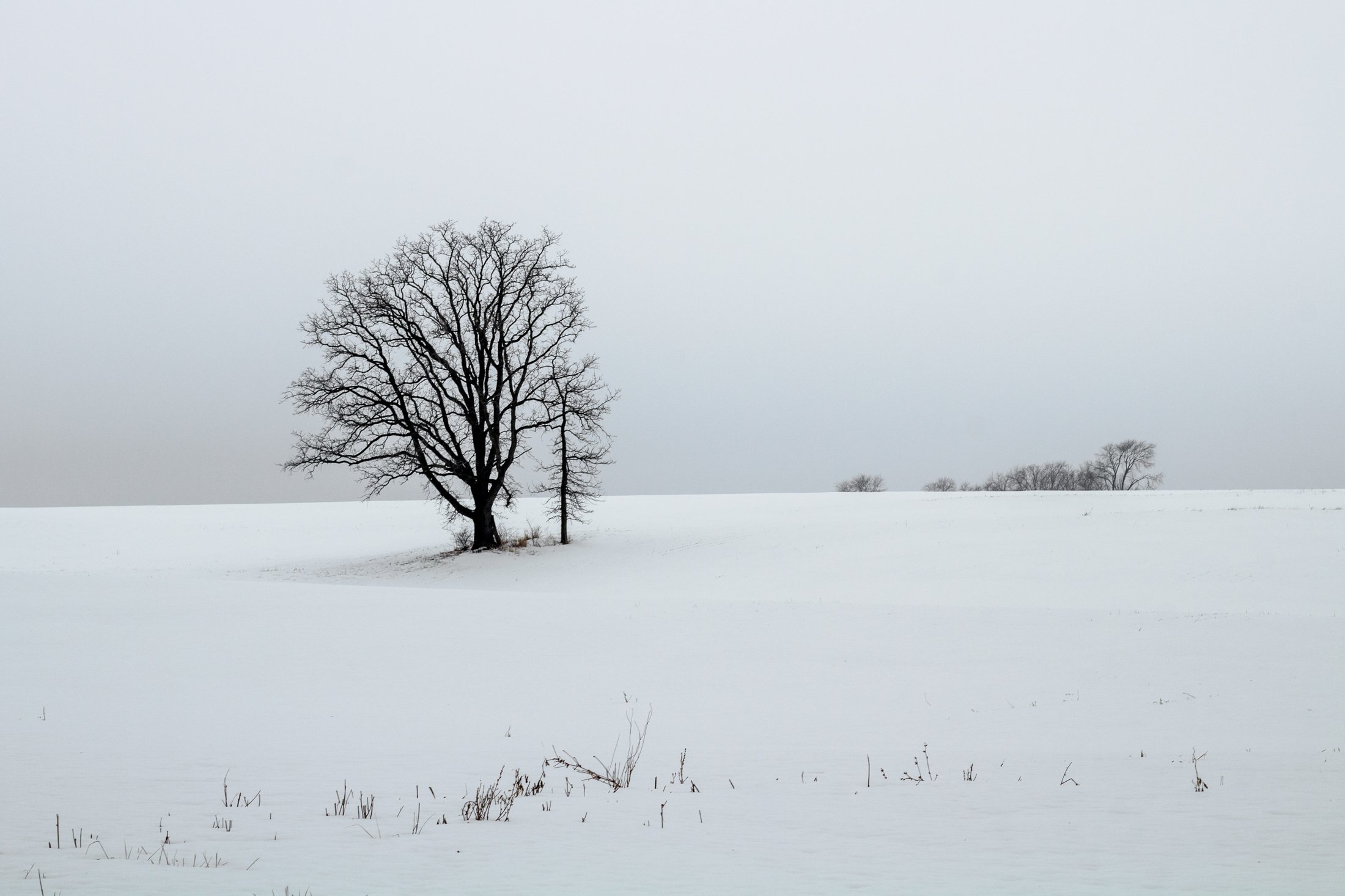
The cornfields near Polo, IL follow twists and turns as the land enters the Driftless Area. It is here where the sinuous and hilly terrain begin to take over. This area, and Illinois in general, is a very prominent agricultural hub for a variety of crops.
This particular area is one I have revisited often, and is part of an ongoing seasonal series yet to be published. This specific scene reminded me of something out of the film Fargo, with the delicate blanket of snow covering the fertile soil beneath.
The composition of this lone tree set against the distant row of trees in the background provided the proper depth for the open spaces these farmlands offer. Previously a historic route to Galena, this picturesque area was rift with natural prairie prior to its transformation for agricultural purposes, but the beauty still remains.

The land near Savannah, IL marks a change to the typical flatness of Illinois. Known as the Driftless Area, the land becomes more sinuous and roads begin to twist and turn.
During the winter, when these lands turn to a frozen tundra, it reminds one of moods made famous in the film “Fargo” (1996). These lone trees have been thought to have marked boundary lines between properties before modern surveying techniques or to have offered shade during the work day.
There is something about these isolated trees in rural Illinois that continually draws my eye. I always wonder if they wonder where their neighbors went. They remain a beautiful contrast to the endless rows of cornfield, changing seasonal with the crop.

These naturally occurring abstract patterns, created by the interplay of wind, water, and sediment, decorate the beaches of Manistee, Michigan. The fine-grained sand reminds one of marble, with its dramatic and delicate textures. They’re a quiet, fleeting reminder of nature’s handiwork.
This was my second visit to the Manistee Lighthouse, with both events being particularly cold days. This day just happened to be my birthday. Finding the right frame for these abstractions can take a bit, and on a cold day like this, it is a race against frostbite. This frame, out of all the ones I took, felt like the best representation of the abstract art in the natural world.
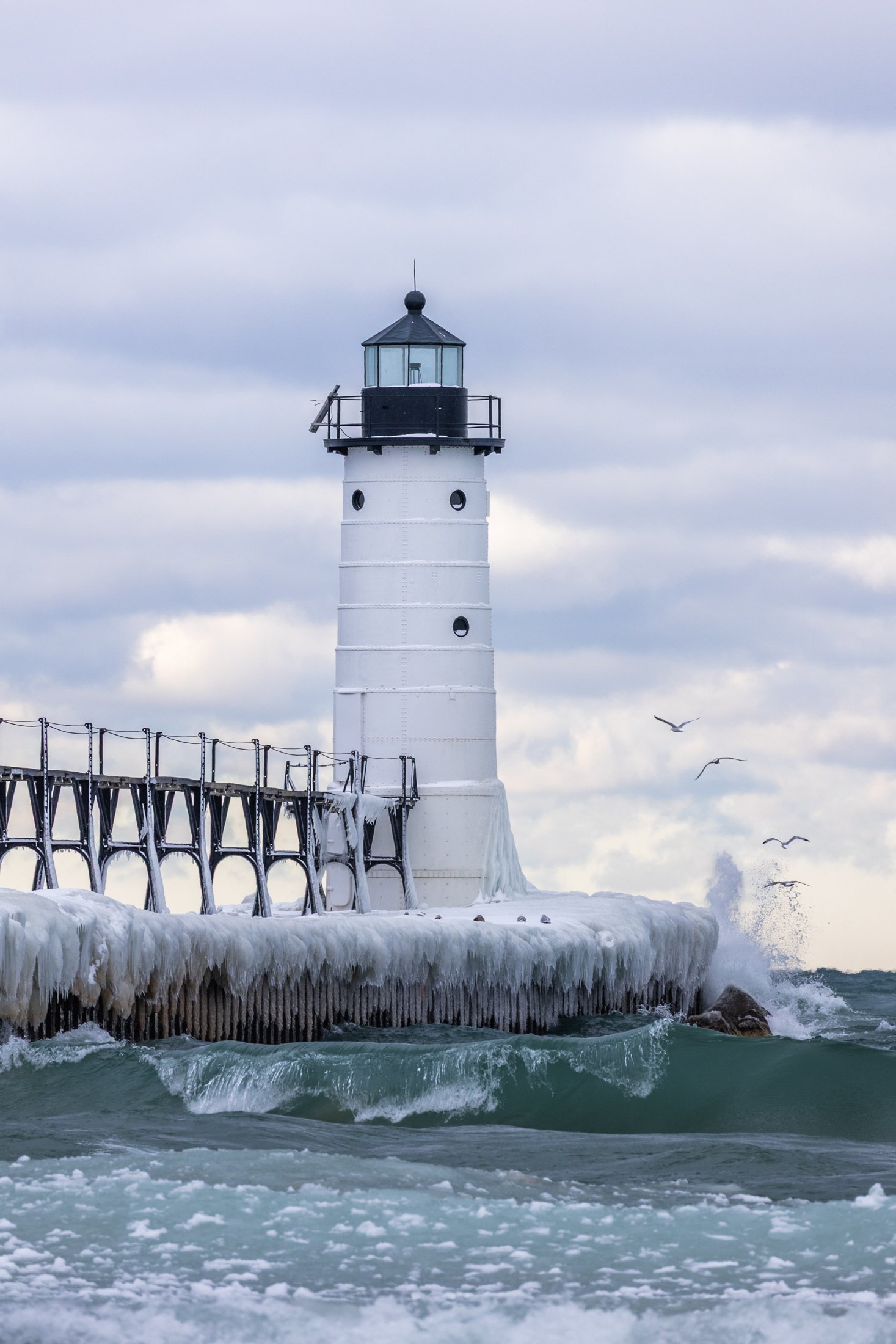
The Manistee North Pier Lighthouse, located in Manistee, Michigan, is as picturesque as any lighthouse can be.
Constructed in 1870, the wooden lighthouse was changed to steel in 1927, providing an important means of safely guiding ships in the lumber industry during the end of the 19th century.
This was my second visit to the Manistee Lighthouse, with both events being particularly cold days. This day just happened to be my birthday. The wind was fierce, and after setting up the shot, I was lucky enough to have some avian tourists enter my frame.

The Manistee North Pier Lighthouse, located in Manistee, Michigan, is as picturesque as any lighthouse can be.
Constructed in 1870, the wooden lighthouse was changed to steel in 1927, providing an important means of safety guiding ships during the lumber industry of the last 19th century. The lighthouse is now on the National Register of Historic Places.
This photo was taken on a particularly cold evening while heading up to Sleeping Bear Dunes. With a windchill of -4 degrees, waiting for this moment required patience, warm clothing, and slowly freezing fingers.

Starved Rock State Park in LaSalle County, Illinois transforms into a stunning winter landscape, and its waterfalls freeze into towering columns of ice. These frozen waterfalls are a major seasonal attraction, drawing hikers, photographers, and ice climbers to the park’s deep sandstone canyons.
Formed by melting snow and natural springs, the waterfalls normally flow through narrow cliff faces, but in winter, they become massive ice formations, sometimes reaching over 80 feet tall. The contrast between the icy formations and the ancient, rust-colored rock walls creates a dramatic and otherworldly scene.
This photo required some careful maneuvering to get to the right position as well as making sure my tripod stayed stable on the ice. Taken earlier in my career, I had not come to appreciate the magic of crampons when navigating slick ice.

The Manistee North Pier Lighthouse, located in Manistee, Michigan, is about as picturesque as any lighthouse can be.
Constructed in 1870, the wooden lighthouse was changed to steel in 1927, providing an important means of safety guiding ships during the lumber industry of the last 19th century. The lighthouse is now on the National Register of Historic Places.
This photo was taken on a particularly cold evening while heading up to Sleeping Bear Dunes. With a windchill of -4 degrees, waiting for this moment required some patience as well as warm clothing, and even then my fingers were risking frostbite making me immediately turn back after grabbing this shot.

The cornfields near Savannah, IL follow twists and turns as the land enters the Driftless Area. It is here it becomes more sinuous and hilly with various streams run through the land.
It holds the name due to the fact that during the last Ice Age, it was left untouched by the glaciers during. As a result, the Driftless Area features rugged, unglaciated terrain with deep valleys, ridges, and bluffs. The absence of glaciers left the streams to carve out their path over thousands of years.
This particular stream sat tucked off a dirt road in the hills surrounding Savannah, IL, unassuming, beautiful.

The Garfield Park Conservatory in Chicago, Illinois contains different flora from all around the world, and is located right off the Green Line on the El system making it easy access for many in Chicago through public transportation.
Known as Cuetlaxochitl in Aztec culture, the Pointsettia was originally a symbol of purity, eventually taking on the mantle as Mexico’s Christmas Flower. Mexican legend holds that a poor girl, named Pepita, had no gift to offer Christ during a Christmas Eve service and instead placed weeds at the nativity scene. These weeds then turned into a bouquet of Flores de Nochebuena or Poinsettias
I brought a small tripod and LED light to the conservatory to capture a range of different plants with more color and drama than ambient light typically allows, and the color in this Pointsettia wouldn’t be ignore.

Starved Rock State Park in LaSalle County, Illinois transforms into a stunning winter landscape, with its waterfalls freezing into towering columns of ice. These frozen waterfalls are a major seasonal attraction, drawing hikers, photographers, and ice climbers to the park’s deep sandstone canyons.
Formed by melting snow and natural springs, the waterfalls normally flow through narrow cliff faces, but in winter, they become massive ice formations, sometimes reaching over 80 feet tall. The contrast between the icy formations and the ancient, rust-colored rock walls creates a dramatic and otherworldly scene.
This photo required some careful maneuvering to get to the right position as well as making sure my tripod stayed stable on the ice. This dead leaf stood out among a sea of white and grey and allowed me to capture a long exposure yet the leaf remained still. Taken earlier in my career, I had not come to appreciate the magic of crampons when navigating slick ice.
These naturally occurring abstract patterns, created by the interplay of wind, water, and sediment, decorate the beaches of Manistee, Michigan. The fine-grained sand reminds one of marble, with its dramatic and delicate textures. They’re a quiet, fleeting reminder of nature’s handiwork.
This was my second visit to the Manistee Lighthouse, with both events being particularly cold days. This day just happened to be my birthday. Finding the right frame for these abstractions can take a bit, and on a cold day like this, it is a race against frostbite.
I love the transition of form in this frame, juxtaposing the sinuous form of the snow-covered sand against the solid rock underneath. The variation in nature’s abstract forms has always fascinated me, and become something I keep an eye out for in each location I visit.