

Michigan

Michigan
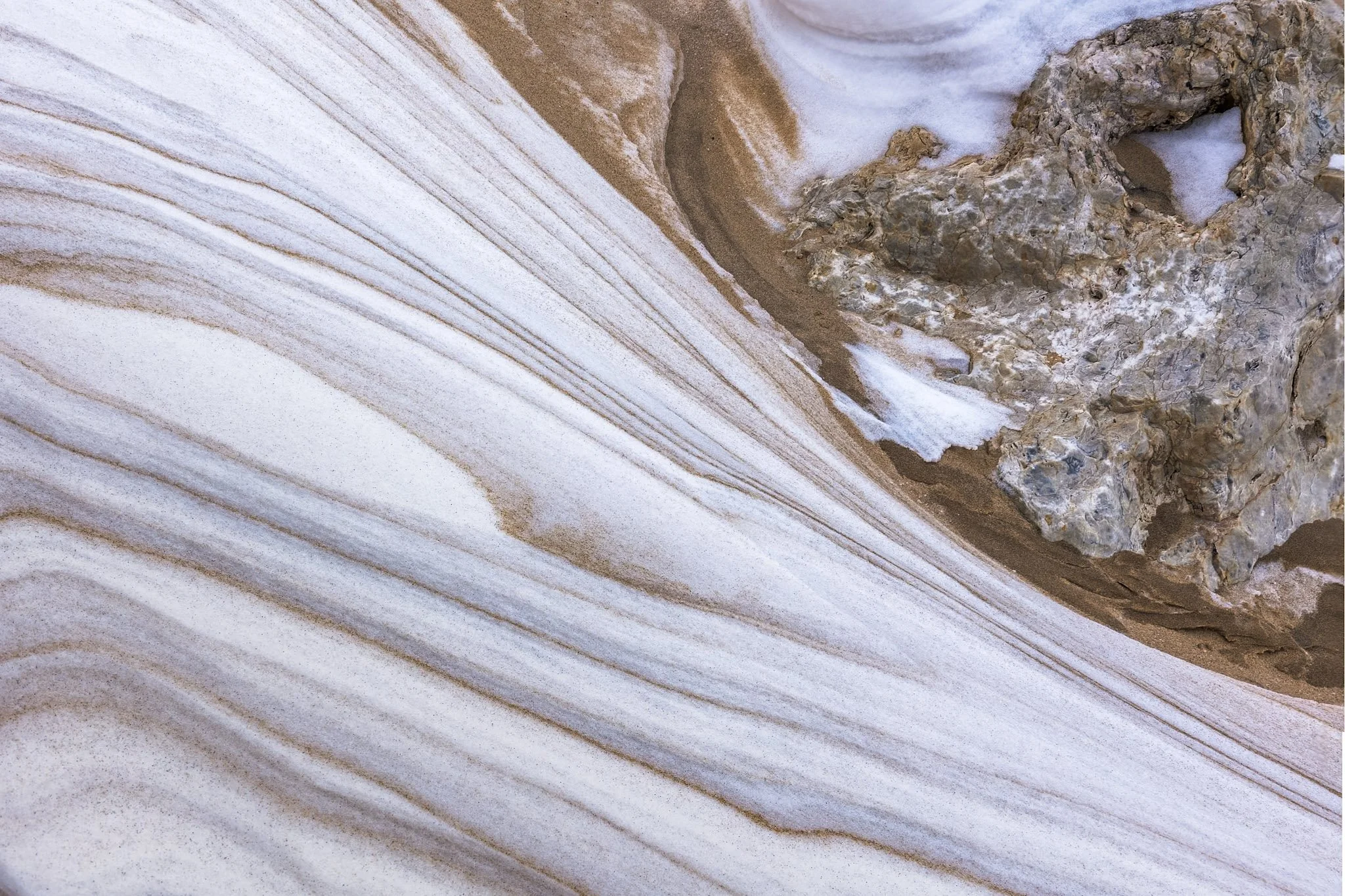
These naturally occurring abstract patterns, created by the interplay of wind, water, and sediment, decorate the beaches of Manistee, Michigan. The fine-grained sand reminds one of marble, with its dramatic and delicate textures. They’re a quiet, fleeting reminder of nature’s handiwork.
This was my second visit to the Manistee Lighthouse, with both events being particularly cold days. This day just happened to be my birthday. Finding the right frame for these abstractions can take a bit, and on a cold day like this, it is a race against frostbite.
I love the transition of form in this frame, juxtaposing the sinuous form of the snow-covered sand against the solid rock underneath. The variation in nature’s abstract forms has always fascinated me, and become something I keep an eye out for in each location I visit.
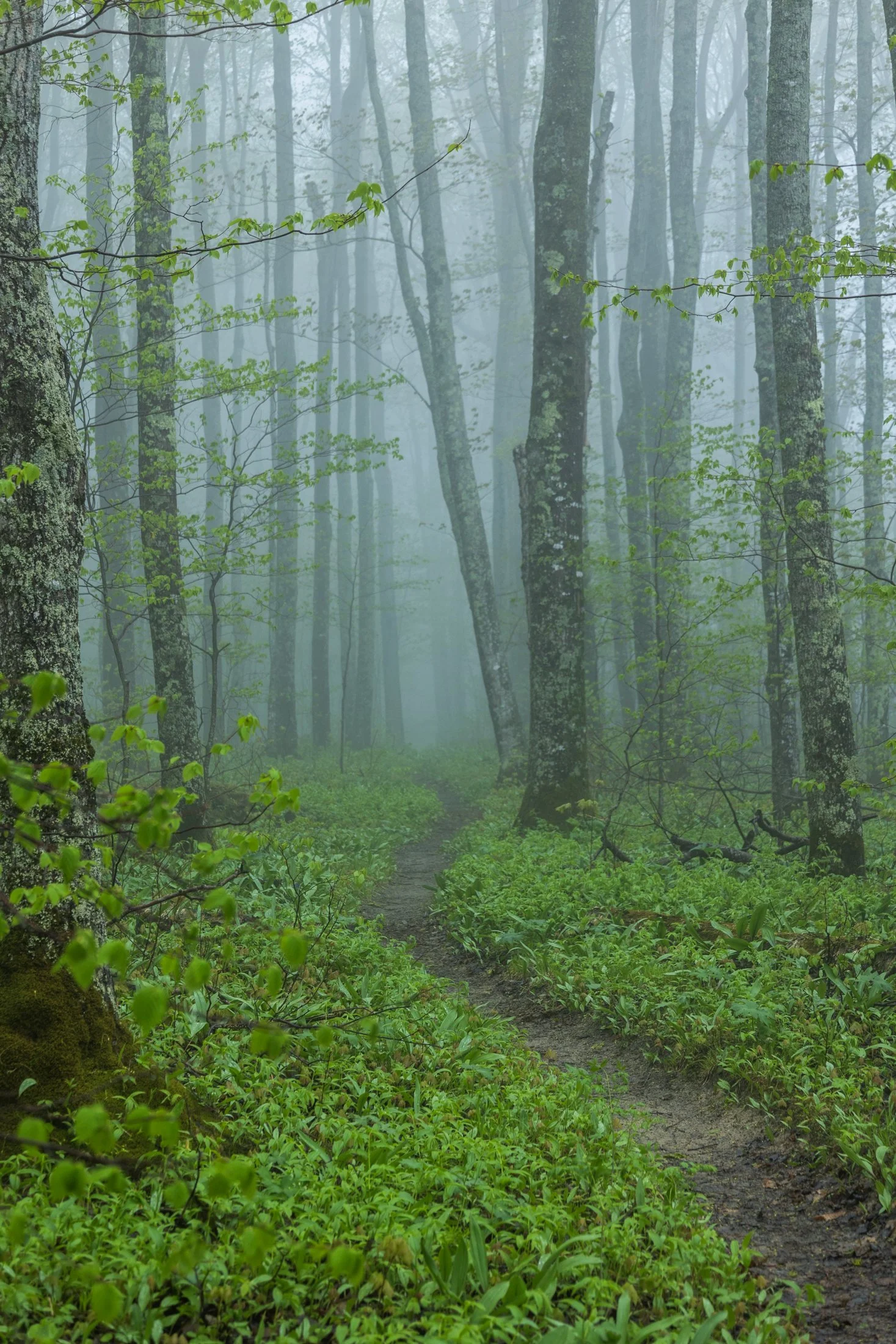
Pictured Rocks National Lakeshore, located near Munising, Michigan, already provides a stunning hiking opportunity for those willing to trek its bluffs, but in the early morning they can often take on a surreal atmosphere as the fog rolls in, transforming the area into a mystic forest.
This fog is often the result of the extremely cold waters of Lake Superior mixing with the warmer air from the land. As the fog rolls in, it muffles sound and adds depth to the already vibrant sandstone cliffs, creating a dramatic backdrop for an already stunning hike.
This particular photo occurred during an 11 mile backpacking trek along the cliffs, providing the one respite from a continuous onslaught of rain throughout the day. The experience of hiking through this atmosphere must be experienced, as this photo barely does it justice, but this winding trail disappearing into the fog serves as a glimpse into its magic.
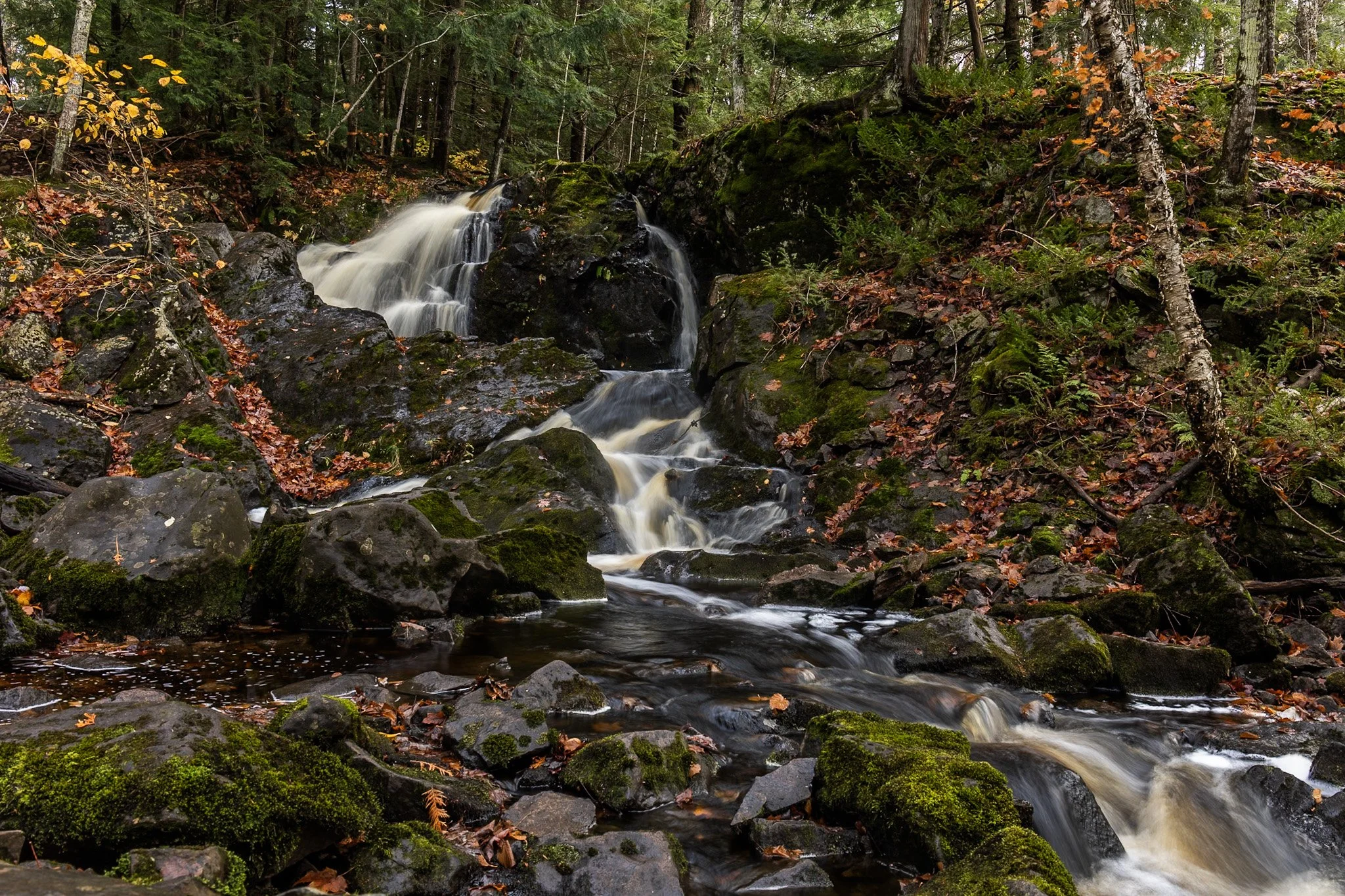
Located near Twin Lakes State Park, Wyandotte Falls finds its source from the Misery River in the Keweenaw Peninsula. The falls consist of a series of short cascades rocky ledges in a quiet, forested setting. The falls create an atmosphere that is reminiscent of a fairy tale forest.
This long exposure required the balancing of my tripod on the river rocks to get the composition that showed its varied pathways. Fall always adds something to a scene like this, and after chasing loud, roaring waterfalls all day, this was a serene end to the day.
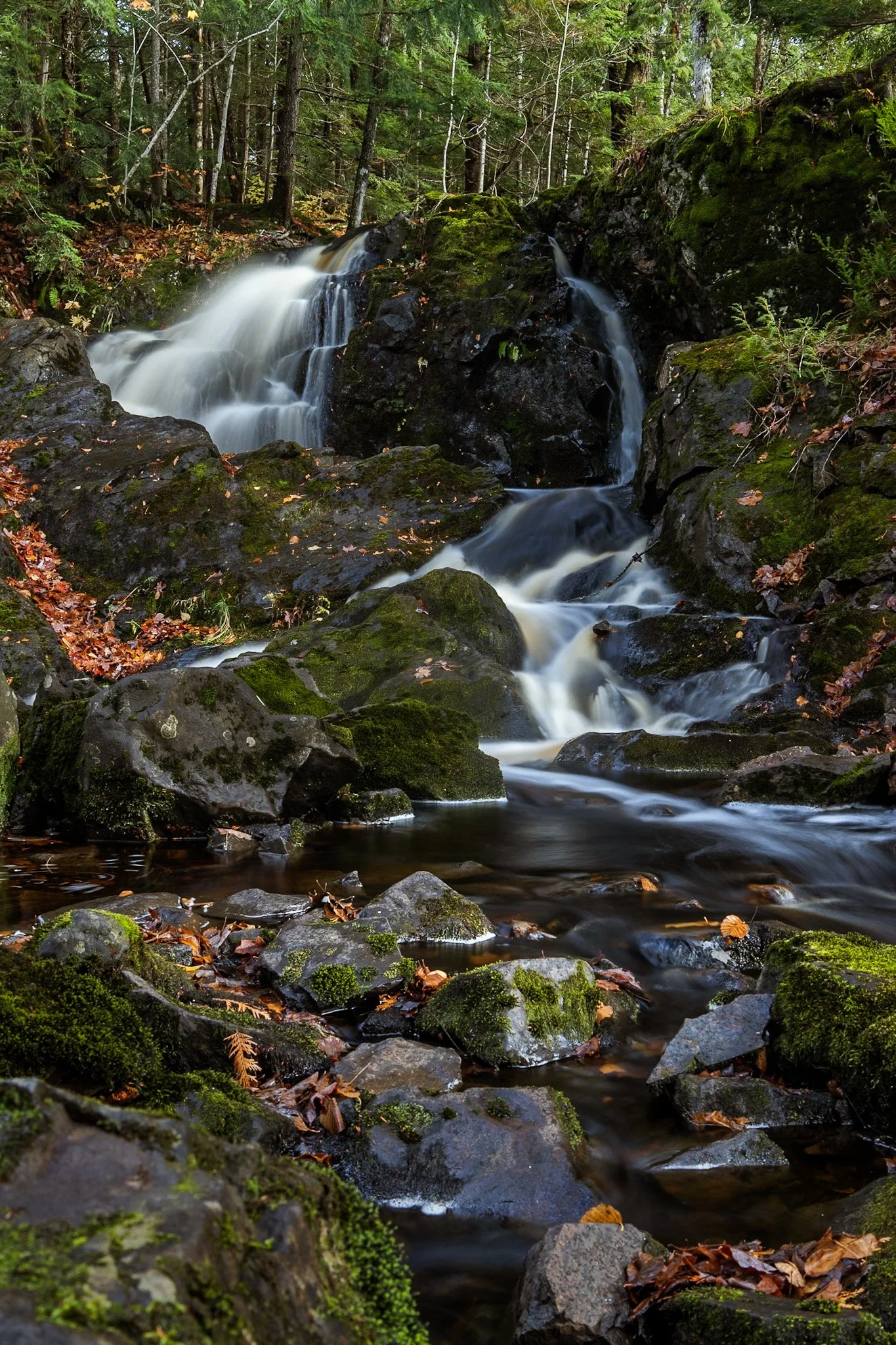
Located near Twin Lakes State Park, Wyandotte Falls finds its source from the Misery River in the Keweenaw Peninsula. The falls consist of a series of short cascades rocky ledges in a quiet, forested setting. The falls create an atmosphere that is reminiscent of a fairy tale forest.
This long exposure required the balancing of my tripod on the river rocks to get the composition that showed its varied pathways. Fall always adds something to a scene like this, and after chasing loud, roaring waterfalls all day, this was a serene end to the day.

Pictured Rocks National Lakeshore, located near Munising, Michigan, is known nationally as a tourist destination due to its dramatic bluffs overhanging Lake Superior, numerous waterfalls, and stunning fall foliage.
These bluffs, as well as the roads around Pictured Rocks, are accentuated by truly dramatic leaf color change for about two weeks in the fall, leading to a flock of photographers and tourists from all over the world.
Lake superior provided a the perfect complementary hue for these extremely saturated yellow leaves, a rare combination of color in nature.
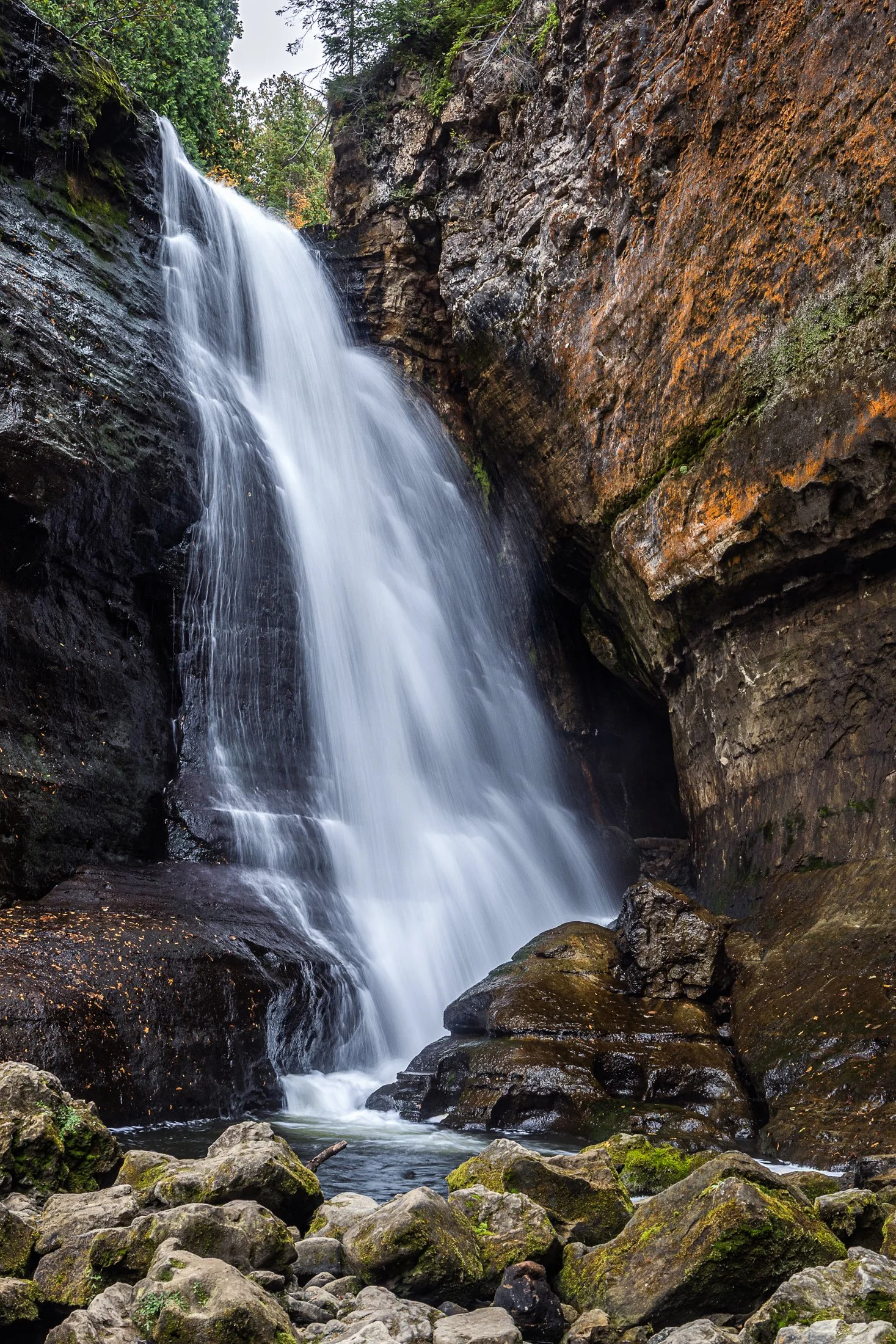
Pictured Rocks National Lakeshore, located near Munising, Michigan, offers up some of the best waterfalls in the Midwest. This, coupled with saturated colors during the dramatic fall foliage, make it a fall vacation spot for many a midwesterner.
The name Miners Falls derives from the local mining history around the area during the 19th century copper boom. The waterfall along with the nearby Pictured Rocks became a big tourist attraction following the decline of the mining industry there.
The continual downpour of this water was amazing to witness. While a fast shutter speed would have captured the pure force of this fall, I found the slower shutter speed revealed its picturesque beauty.

The Manistee North Pier Lighthouse, located in Manistee, Michigan, is about as picturesque as any lighthouse can be.
Constructed in 1870, the wooden lighthouse was changed to steel in 1927, providing an important means of safety guiding ships during the lumber industry of the last 19th century. The lighthouse is now on the National Register of Historic Places.
This photo was taken on a particularly cold evening while heading up to Sleeping Bear Dunes. With a windchill of -4 degrees, waiting for this moment required some patience as well as warm clothing, and even then my fingers were risking frostbite making me immediately turn back after grabbing this shot.

Named the most “Beautiful Place in America” by Good Morning America, Sleeping Bear Dunes National Lakeshore is a Midwest vacation destination located near Empire, Michigan.
The sands at Sleeping Bear are constantly shifting, with the tallest dune exceeding 400 feet. Originating during the last Ice Age, these sands were formed through glaciers slow grinding down of the rock.
Noticing the moving sand while hiking, its flow became a subject onto itself. This photo provides a strange juxtaposition between concrete sand and the windblown abstraction.

These naturally occurring abstract patterns, created by the interplay of wind, water, and sediment, decorate the beaches of Manistee, Michigan. The fine-grained sand reminds one of marble, with its dramatic and delicate textures. They’re a quiet, fleeting reminder of nature’s handiwork.
This was my second visit to the Manistee Lighthouse, with both events being particularly cold days. This day just happened to be my birthday. Finding the right frame for these abstractions can take a bit, and on a cold day like this, it is a race against frostbite. This frame, out of all the ones I took, felt like the best representation of the abstract art in the natural world.

Named the most “Beautiful Place in America” by Good Morning America, Sleeping Bear Dunes National Lakeshore is a Midwest vacation destination located near Empire, Michigan.
The sands at Sleeping Bear are constantly shifting, with the tallest dune exceeding 400 feet. Originating during the last Ice Age, these sands were formed through glaciers grinding down the rock.
Noticing the moving sand while hiking, its flow became a subject onto itself. This photo provides a strange juxtaposition between concrete sand and the windblown abstraction.
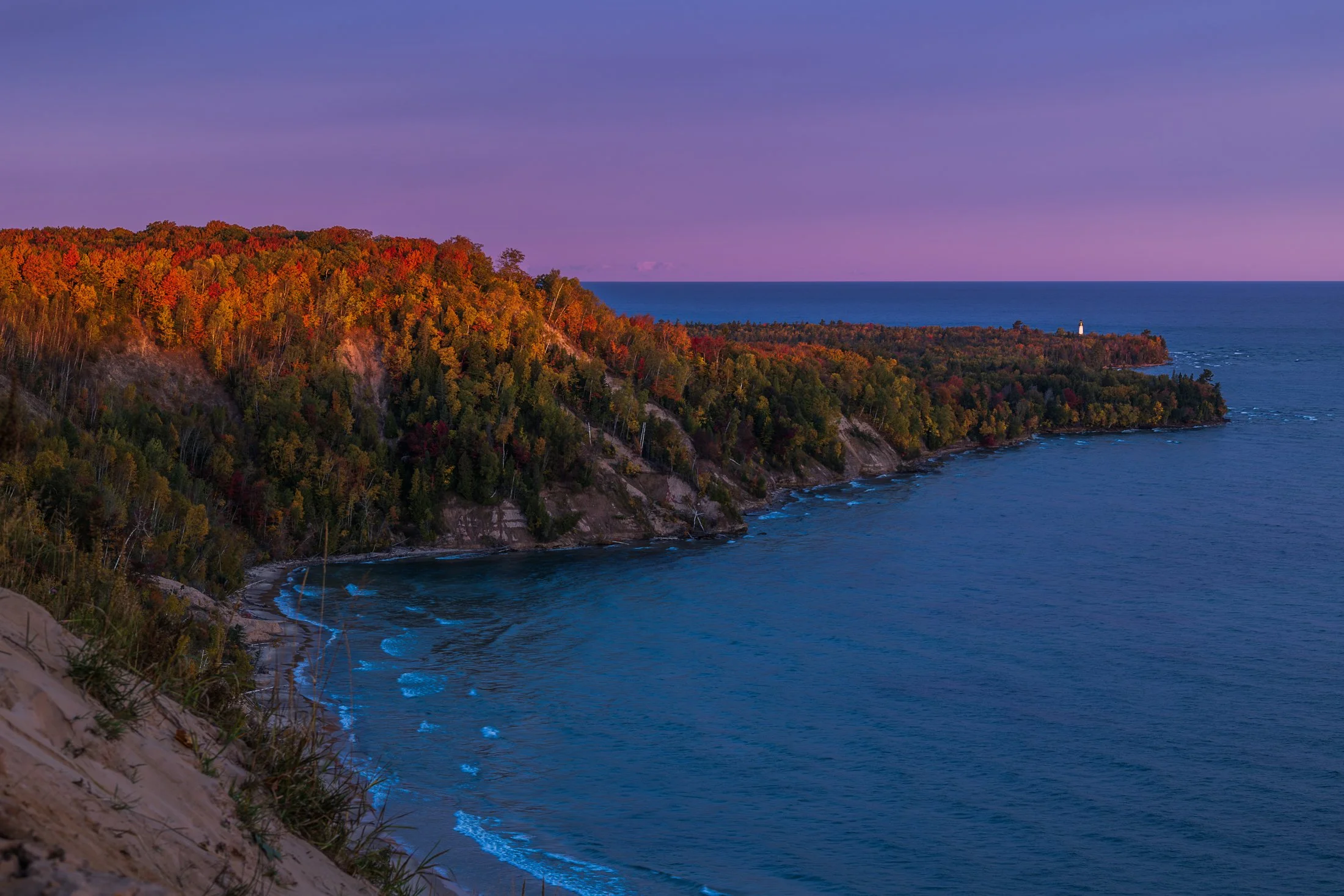
The fall colors of Pictured Rocks National Lakeshore are one of the marvels of the Upper Peninsula, especially in the early morning. Pictured here is the Au Sable Light, a lighthouse that was built in 1874 to prevent shipwrecks on Lake Superior.
The shoreline in this area is considered one of North America's most beautiful, but was once considered the most deadly areas for ships due to rocks under the shallow surface, violent storms, and frequent fog.
Requiring an early wakeup call, this photo involved positioning myself precariously on the shifting sands of the Grand Sable dunes before the sunrise. The changing color over the next hour was an amazing sight to behold as well as the moment the light broke across this stretch of coast.
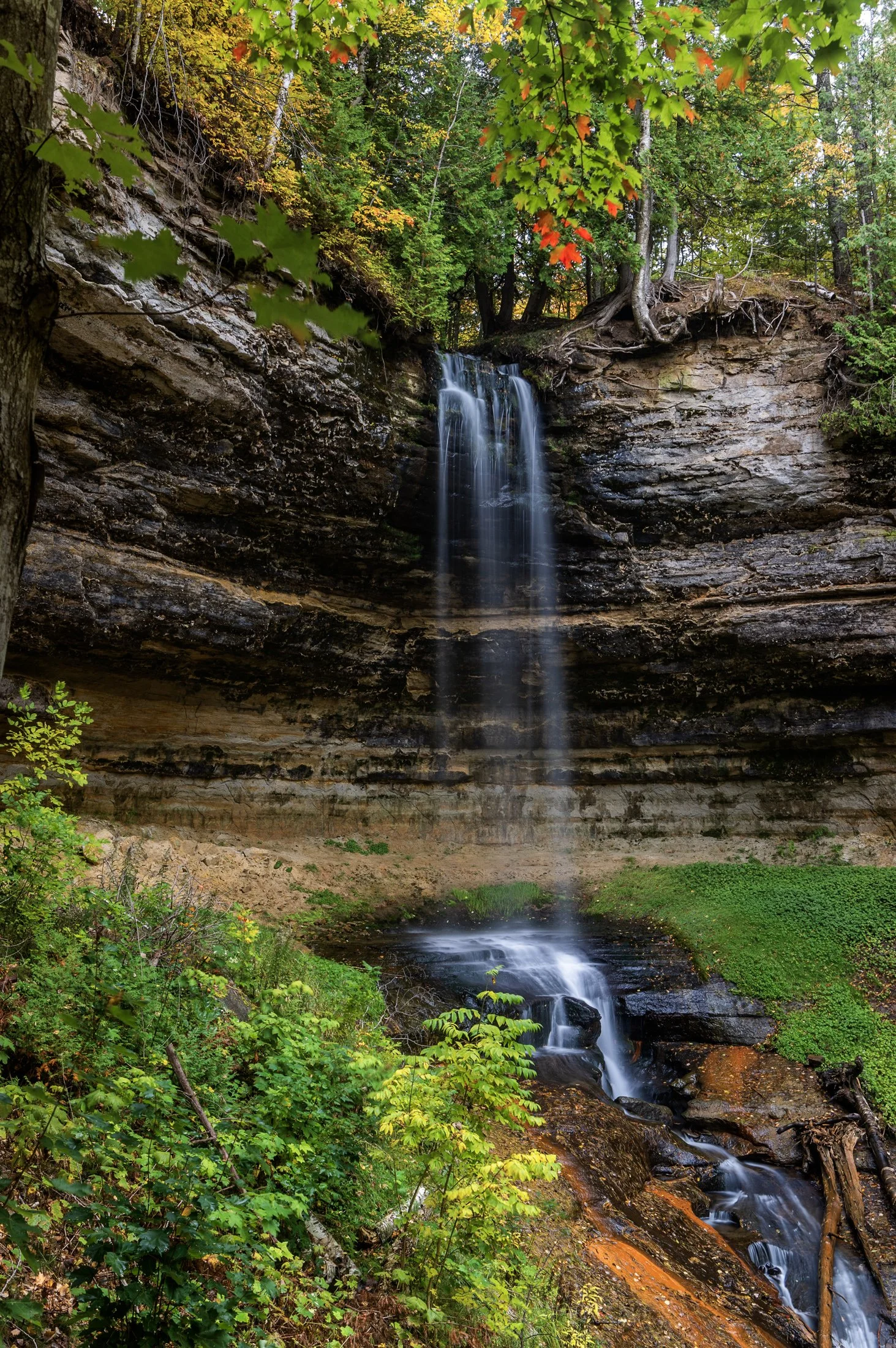
Pictured Rocks National Lakeshore, located outside of Munising, Michigan, offers up some of the best waterfalls in the Midwest. This, paired with the unbelievable colors that arise during peak fall season, make it a top travel destination.
Right near the town of Munising, the eponymous falls are easily accessible with a viewing area for all ages. A paved trail leads directly to the falls directly from the Pictured Rocks Visitors Center.
The peak foliage against these historically picturesque falls accentuated this long exposure, complimenting the beauty of the surrounding sandstone valley, formed through extensive periods of erosion.

The Manistee North Pier Lighthouse, located in Manistee, Michigan, is as picturesque as any lighthouse can be.
Constructed in 1870, the wooden lighthouse was changed to steel in 1927, providing an important means of safety guiding ships during the lumber industry of the last 19th century. The lighthouse is now on the National Register of Historic Places.
This photo was taken on a particularly cold evening while heading up to Sleeping Bear Dunes. With a windchill of -4 degrees, waiting for this moment required patience, warm clothing, and slowly freezing fingers.

The escarpment at Pictured Rocks, in this case Chapel Rock, is part of the dramatic sandstone cliff formations that define the Pictured Rocks National Lakeshore along Lake Superior in Michigan’s Upper Peninsula. Chapel Rock itself is a striking feature of this escarpment — a freestanding column of Nape sandstone, shaped by centuries of erosion from wind, water, and ice.
This section of the escarpment showcases the layered and weathered nature of the sandstone, with its rich textures and colors—ranging from golden hues to deep reds and greens—caused by the mineral content in groundwater.
After a long day of backpacking, I set up camp and filtered water from Lake Superior while setting up this shot. I found the rock against the passing storm a particularly interesting composition, showing the fascinating rock that has been a source of wonder for centuries.

The Grand Island East Channel Light was constructed in 1867 by the United States Lighthouse Service to help ships navigate the dangerous waters of the East Channel of Grand Island, which has historically been a busy route for steamships and commercial vessels.
The area was notorious for shipwrecks during the 1800s due to the complexity of the navigation and the strong currents in the surrounding waters. Decommissioned in the early 1970s the Lighthouse remains as an iconic stop on Pictured Rock Cruises.
While taking the cruise, I positioned myself on the outside seats to grab this photo, requiring a quick shutter speed and precise timing to get this compositon.
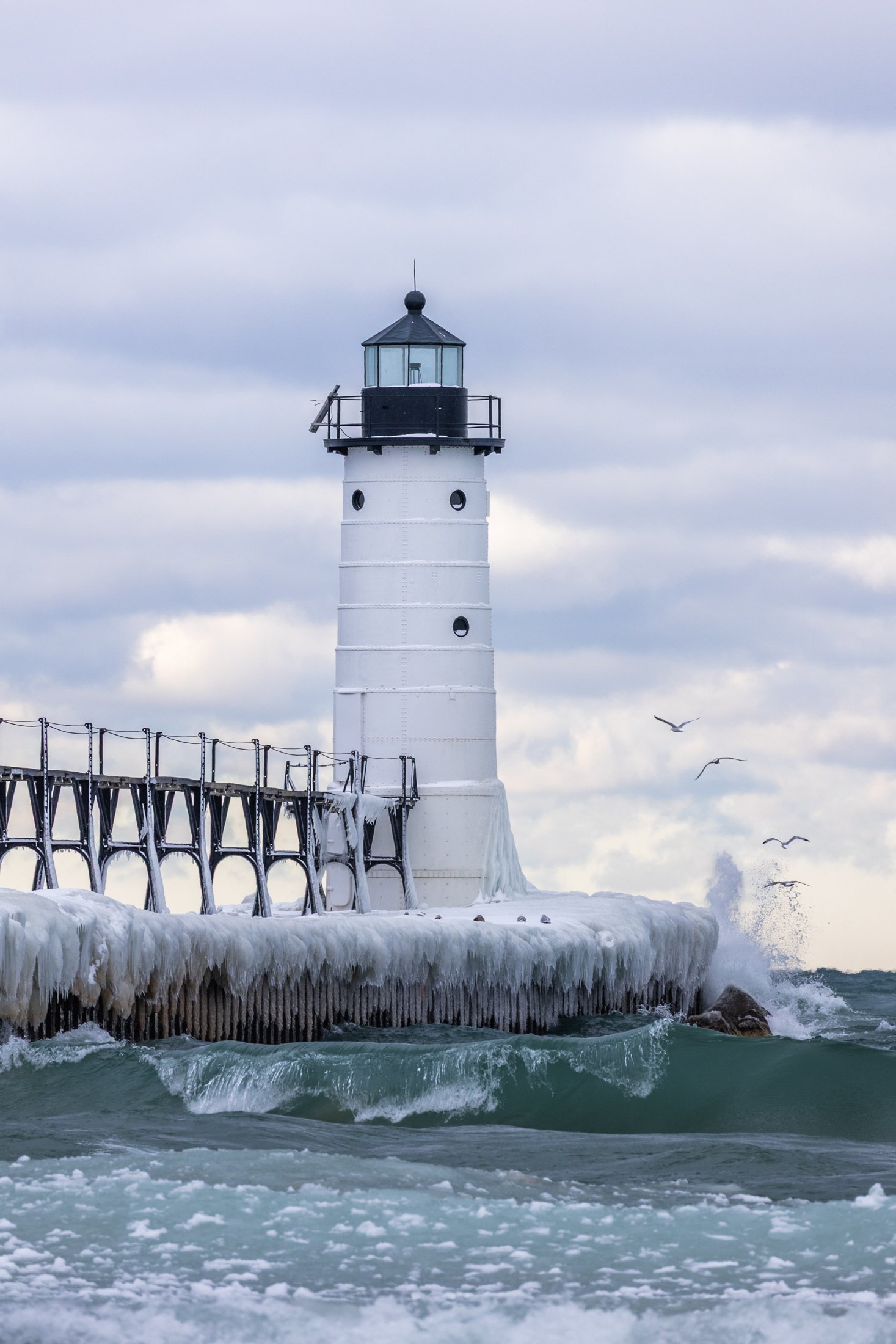
The Manistee North Pier Lighthouse, located in Manistee, Michigan, is as picturesque as any lighthouse can be.
Constructed in 1870, the wooden lighthouse was changed to steel in 1927, providing an important means of safely guiding ships in the lumber industry during the end of the 19th century.
This was my second visit to the Manistee Lighthouse, with both events being particularly cold days. This day just happened to be my birthday. The wind was fierce, and after setting up the shot, I was lucky enough to have some avian tourists enter my frame.

The lone white pine on Chapel Rock, located in Pictured Rocks National Lakeshore is estimated to be about 250 years old. There once was an archway connecting the rock to the mainland but it collapsed in the 1940s.
Chapel Beach and the mouth of Chapel River is adjacent to Chapel Rock. The area invites hikers and boaters to linger, and a popular backcountry campground is found here, offering a secluded beach and access to many waterfalls.
After a long day of hiking, taking this sunset boat tour along Pictured Rock’s coast was a perfect way to end the day. It allowed stunning views as well as completely unique photographic perspectives not possible from the shore.

The lone white pine on Chapel Rock, located in Pictured Rocks National Lakeshore, is estimated to be about 250 years old. There once was an archway connecting the rock to the mainland but it collapsed in the 1940s.
Chapel Beach and the mouth of Chapel River is adjacent to Chapel Rock, and is popular backcountry campground and hiking destination, offering a secluded beach as well as access to many waterfalls.
After a long day of backpacking, I set up camp and filtered water from Lake Superior while setting up this shot. The mouth of the Chapel River is pictured here, showing the diversity of this picturesque environment that has been a source of wonder for centuries.

Pictured Rocks National Lakeshore and the surround area offer up some of the best waterfalls in the Midwest as well as an incredibly diverse ecosystem including huge cliffs, expansive beaches, towering sand dunes, rocky shores, and freshwater sea caves.
Mosquito Falls, pictured here, appears on the ten mile round trip hike to Chapel Rock. The falls are fed by the Mosquito River which draws from the area’s streams and swamps eventually emptying into Lake Superior.
This photo required some scrambling to get down into the basin as well as balancing my tripod legs precariously on a downed log, keeping my hands close by during the exposure in case it fell into the river from a small shake. A lesson from a mishap years earlier in a cave.

Pictured Rocks National Lakeshore and the surround area offer up some of the best waterfalls in the Midwest as well as countless other sights sprinkled throughout the area.
Mosquito Falls at Pictured Rocks National Lakeshore can be found while meandering on your way to the famous Chapel Rock. The falls are fed by the Mosquito River which draws from the area’s streams and swamps eventually emptying into Lake Superior.
This photo required some scrambling into the basin and then balancing my tripod legs precariously on different sections of a log, keeping my hands close by during the exposure in case it fell, a lesson I had learned years earlier photographing in a cave.
Lover’s Leap Arch, located in Pictured Rocks National Lakeshore, near Munising, Michigan, is one of the park's most iconic and photographed spots. The towering 200-foot cliffs and turquoise waters are often photographed from the local boat cruise and are rarely seen from this vantage point.
The cliffs colors, created by mineral staining, gives the area its "painted" appearance and inspiring the park’s name. According to Native American legend, Lover's Leap got its name from a heartbroken woman’s jump to her death after her lover’s failure to return from a journey.
Part of my 22-mile backpacking trip along cliff, this stormy day lead to Lake Superior’s waves continually crashing into the cliffs, often reaching their full height. These are the same storms that lead to the wreck of many ships, including the Edmund Fitzgerald.