

Sand Dunes

Sand Dunes
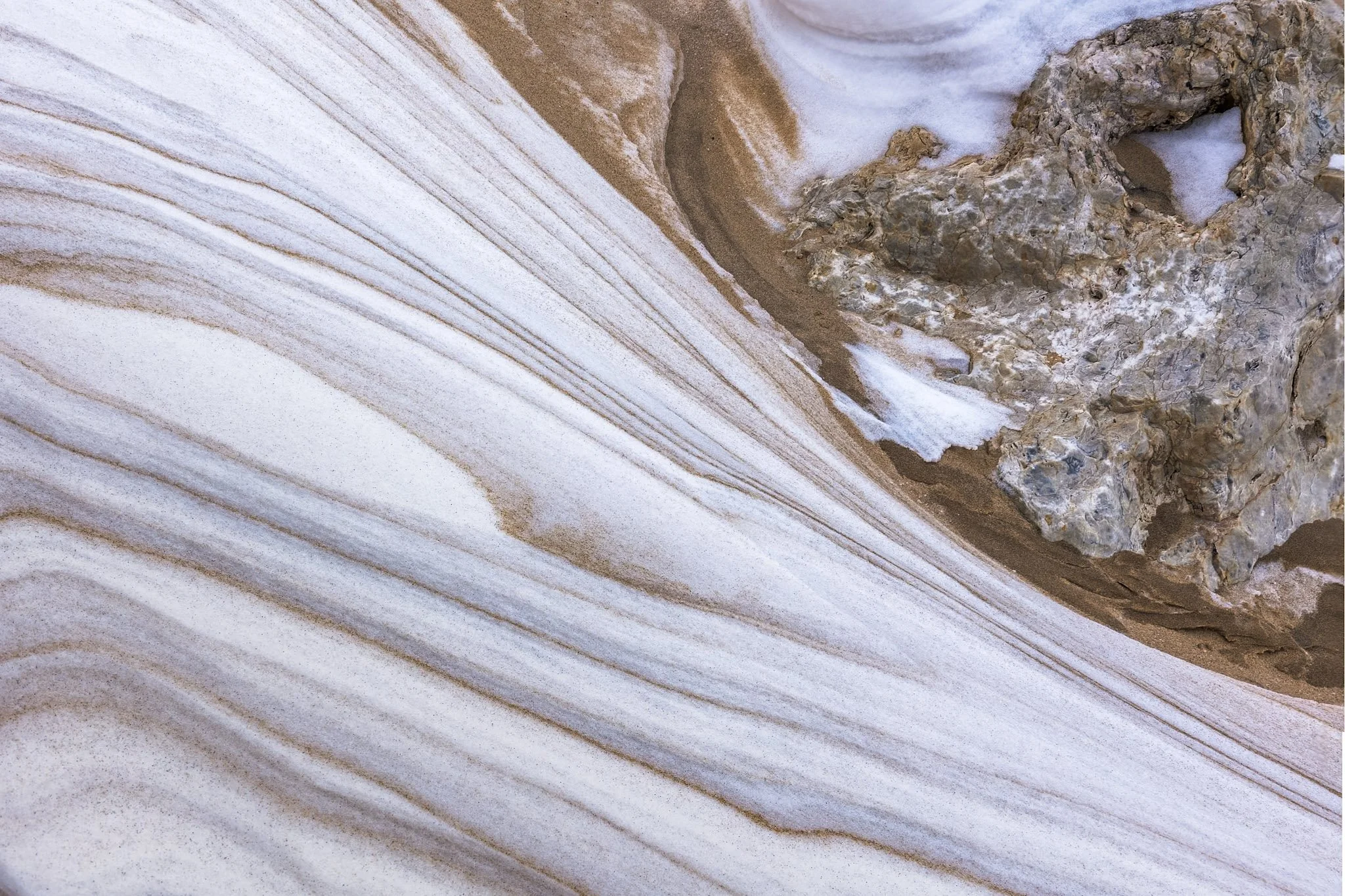
These naturally occurring abstract patterns, created by the interplay of wind, water, and sediment, decorate the beaches of Manistee, Michigan. The fine-grained sand reminds one of marble, with its dramatic and delicate textures. They’re a quiet, fleeting reminder of nature’s handiwork.
This was my second visit to the Manistee Lighthouse, with both events being particularly cold days. This day just happened to be my birthday. Finding the right frame for these abstractions can take a bit, and on a cold day like this, it is a race against frostbite.
I love the transition of form in this frame, juxtaposing the sinuous form of the snow-covered sand against the solid rock underneath. The variation in nature’s abstract forms has always fascinated me, and become something I keep an eye out for in each location I visit.
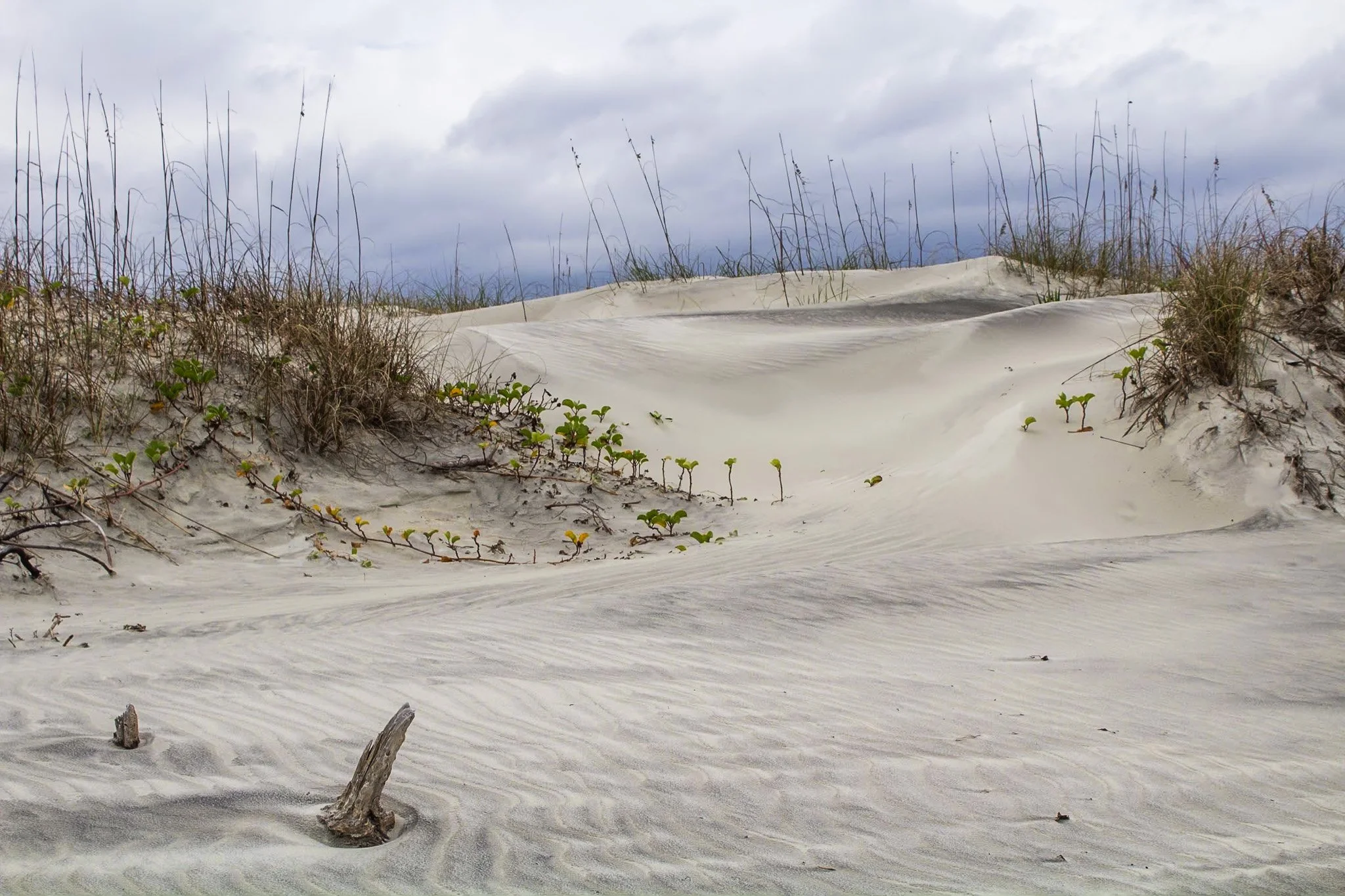
This photo was from my first visit to Cumberland Island National Seashore, located on the border of Georgia and Florida with access via a Ferry from St. Marys, Georgia. I would revisit this same island four years later, affording me the opportunity to finally explore all 18 miles of it.
The beach here is pristine, a stark comparison to the islands directly north and south of it which have been developed for residential and tourist activities. The island has faced various threats to its wilderness status and has been defended through the constant efforts of Carol Ruckdeschel, one of the few persons permitted to live on the island, and who I had the pleasure of meeting randomly on my second visit.
This photo was taken in the early morning on an overcast day following my sunrise shoot, and the feel of this specific patch of sprawling dunes system felt like something out of a painting.
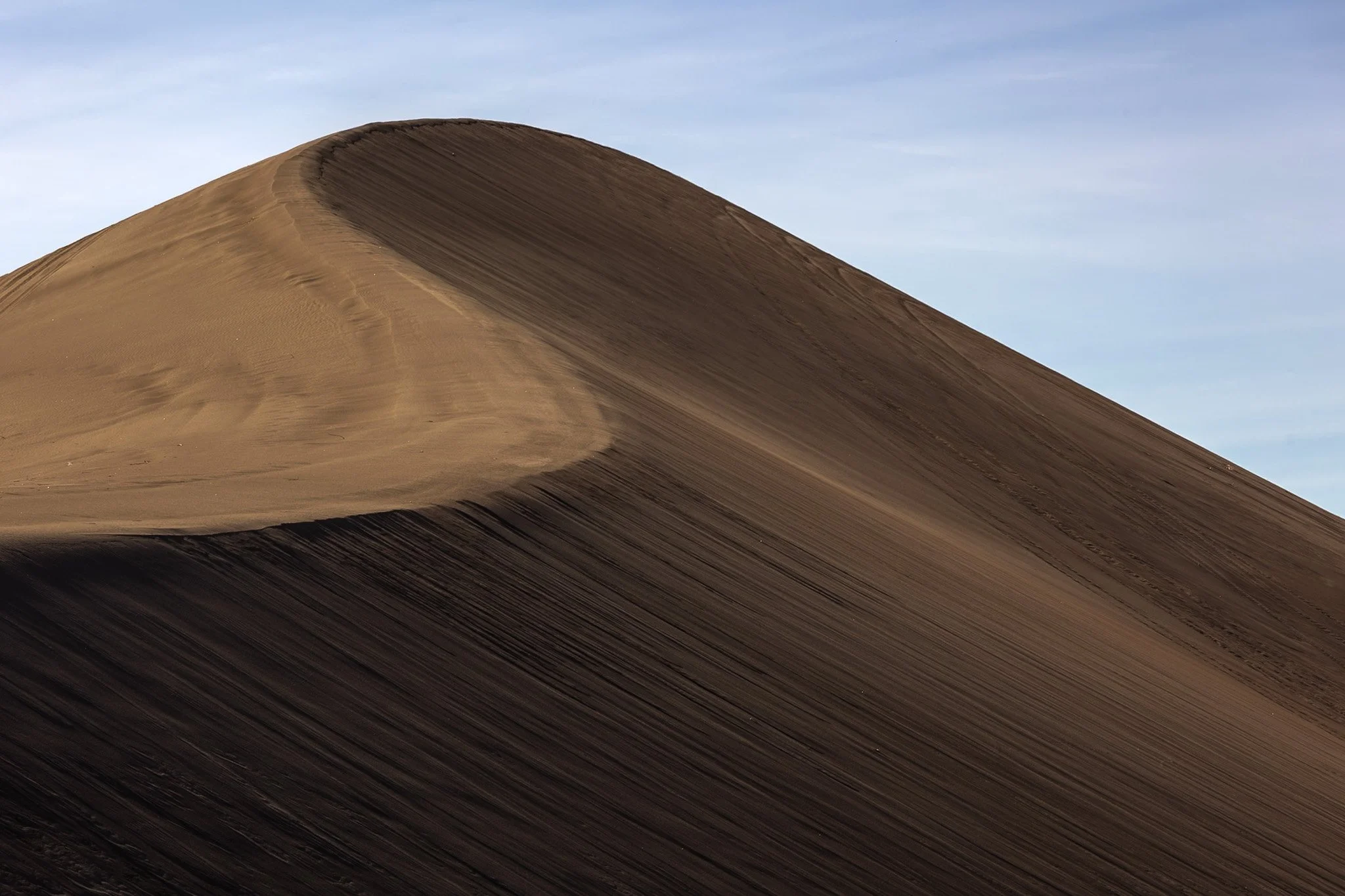
The dunes in and around Death Valley are primarily shaped by wind, which picks up and transports sand particles across the valley floor. Sediment from surrounding mountains supplies the sand forming these natural features.
The wind's constant movement reshape the dunes, causing them to shift across the valley, often forming barchan dunes which hold crescent shapes, such as the one seen here.
I found this specific dune formation completely deserted (excuse the pun) in the early morning. Walking to the base of it, it was tough not to be struck by the gigantic sense of time, space, and form the area offers up. This telephoto capture isolated its gentle untouched waves towering on the horizon from miles away.

Named the most “Beautiful Place in America” by Good Morning America, Sleeping Bear Dunes National Lakeshore is a Midwest vacation destination located near Empire, Michigan.
The sands at Sleeping Bear are constantly shifting, with the tallest dune exceeding 400 feet. Originating during the last Ice Age, these sands were formed through glaciers slow grinding down of the rock.
Noticing the moving sand while hiking, its flow became a subject onto itself. This photo provides a strange juxtaposition between concrete sand and the windblown abstraction.

Cumberland Island National Seashore is a pristine 18 mile stretch of undeveloped wilderness unique to the East Coast. With this comes an undeveloped beach that provides a stunning juxtaposition to the developed lands north and south of it.
The island has a long history, and was once owned by the Carnegie Family who then dedicated the island to the National Park Service in 1972. The island has faced various threats to its wilderness status and has been defended through the continued efforts of Carol Ruckdeschel, one of the few persons allowed to live on the island.
Through multiple visits to Cumberland, I have always found the sands particularly beautiful, creating myriads of abstract patterns. Each time I visit, I spend time with these Rorschach tests.
Named the most “Beautiful Place in America” by Good Morning America, Sleeping Bear Dunes National Lakeshore is a Midwest vacation destination located near Empire, Michigan.
The sands at Sleeping Bear are constantly shifting, with the tallest dune exceeding 400 feet. Originating during the last Ice Age, these sands were formed through glaciers grinding down the rock.
Noticing the moving sand while hiking, its flow became a subject onto itself. This photo provides a strange juxtaposition between concrete sand and the windblown abstraction.

These naturally occurring abstract patterns, created by the interplay of wind, water, and sediment, decorate the beaches of Manistee, Michigan. The fine-grained sand reminds one of marble, with its dramatic and delicate textures. They’re a quiet, fleeting reminder of nature’s handiwork.
This was my second visit to the Manistee Lighthouse, with both events being particularly cold days. This day just happened to be my birthday. Finding the right frame for these abstractions can take a bit, and on a cold day like this, it is a race against frostbite. This frame, out of all the ones I took, felt like the best representation of the abstract art in the natural world.

John Dellenback Dunes Trail is one of the best “trails” in the Oregon Dunes National Recreation Area near Florence, Oregon. The sand dunes here one of the largest coastal sand dune systems in the world.
This area inspired Frank Herbert to write the science fiction book Dune. Herbert found this and the surrounding areas fascinating, studying desert ecology and erosion at a time when Oregon was establishing a way to combat the damage of the shifting dunes on the local towns by planting European Beachgrass.
Hiking these dunes was an exhausting but exhilarating experience requiring some astute navigation as a majority of the ”trail” can only be found by wooden markets in the sand, sometimes entirely buried by the dunes. This lone tree stuck out among the dunes as I turned around to keep my bearings.
The dunes in and around Coral Pink Sand Dunes State Park, located on the border of Utah, are primarily shaped by wind and erosion, which picks up and transports sand particles across the valley floor. Sediment from surrounding mountains supplies the sand forming these natural features.
The area is known for frequent ATV usage, allowing visitors to traverse the dune system in style. Sandboarding is also available for purchase from the state park, but be careful, as these boards gain some speed especially on the larger dunes.
This was my third visit to the state park, and there’s a reason I keep coming back. The campsite is phenomenal, allowing access to the dune system from the campground. I grabbed this shot right before my friend’s footprints ruined the pristine, untouched dune. This was the first stop on my most recent trip to the Kanab area, with the next stop being the dangerously beautiful Buckskin Gulch.