

Monoliths

Iconic, religious, Hollywood-graced, the West Mitten Butte watches over the land of Monument Valley, a stunning area residing along the Utah-Arizona border.
These buttes hold major religious significance for the Navajo. Legend holds they are the remains of great religious deities. Filmmaker John Ford found his home in Monument Valley, countless westerns there with John Wayne, with the Mittens featuring prominently in such films as “The Searchers” (1956) and have now become icons of the American West.
Monument Valley maintains one of the best campsites I’ve ever had the pleasure of camping at, and it is a perfect one for photographing the Mittens. The campsite sits atop a sand band looking straight out towards The Mittens, evoking a drive-in movie theater, replacing the screen with one of the best views in the West.
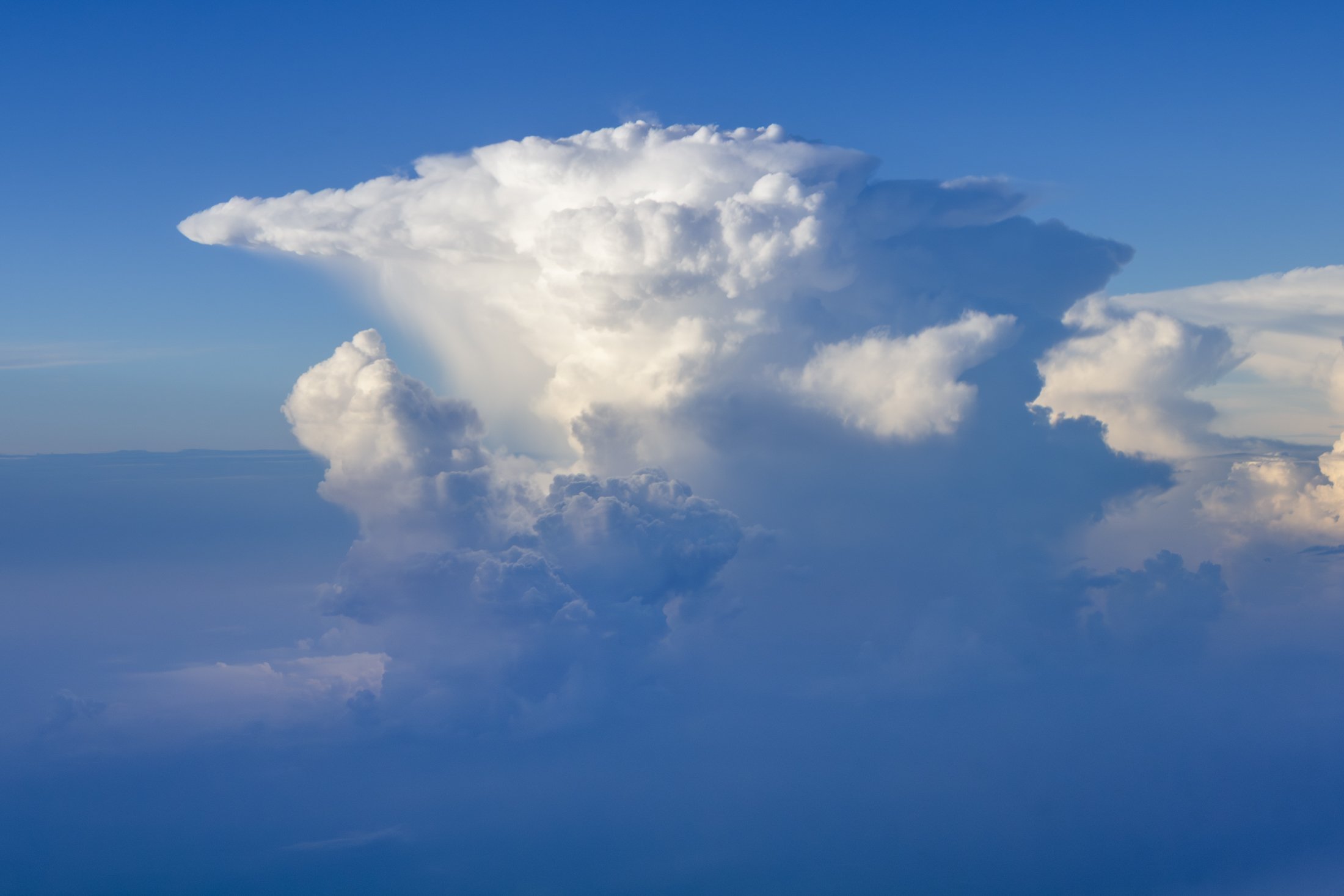
Cumulonimbus clouds are among the most powerful and visually striking clouds in the atmosphere. The only clouds that produce thunder and lightning, these towering giants can reach heights of over 12 miles.
One of the most distinctive features of a mature cumulonimbus cloud is its anvil-shaped top such as the one seen here, which forms when the cloud's upward growth is halted by the tropopause, causing the upper part to spread out horizontally.
I was lucky enough to witness this fascinating formation while taking off from Chicago at the tail end of a storm. The sheer size was daunting, and the setting sun raked against the cloud perfectly. This is an alternate to the black and white version, as I found both offered something different.
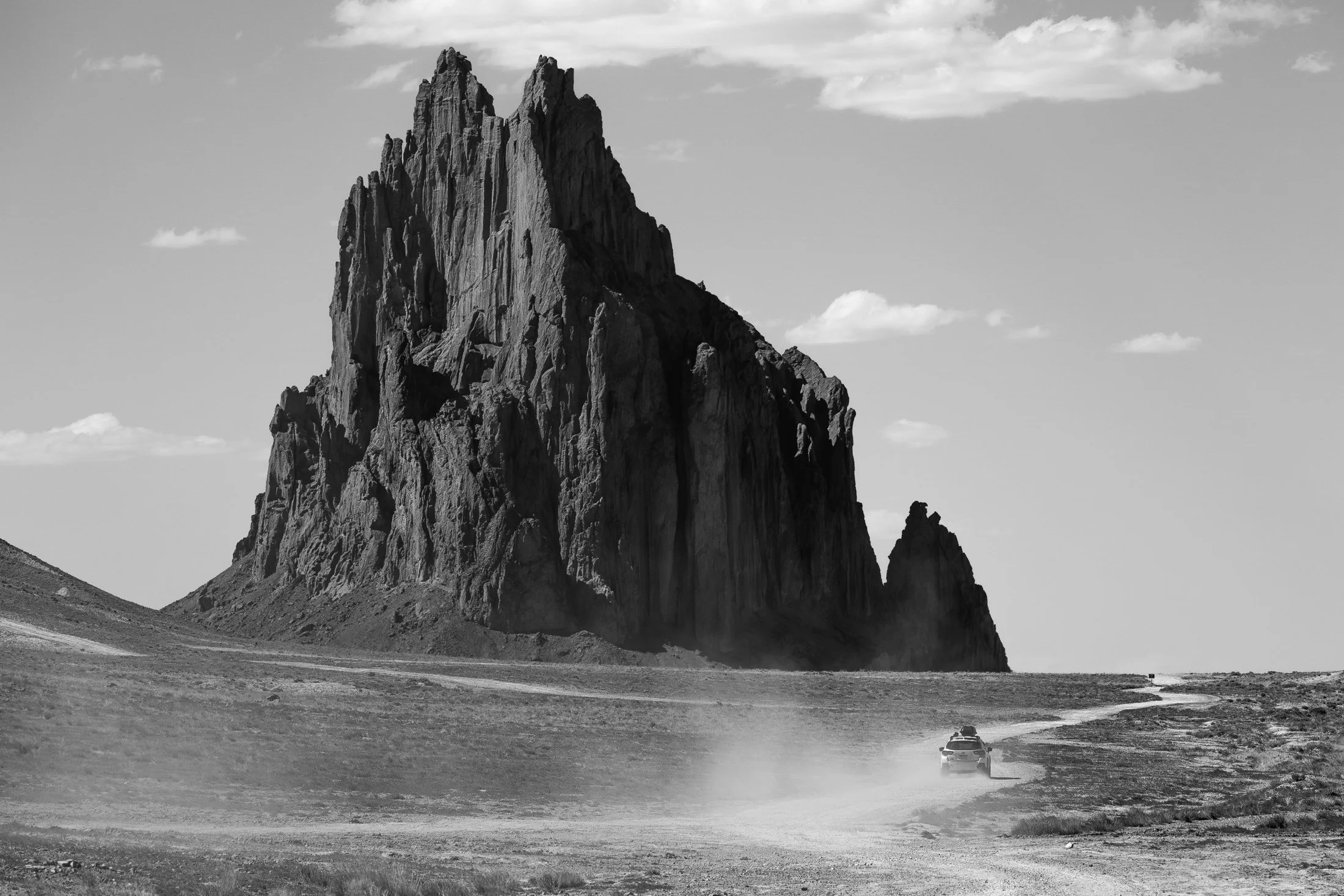
Located outside of Shiprock, New Mexico, the eponymous monolith is known by the Diné as Tsé Bit'a'í, which translates roughly to "Rock with Wings." The sacred site is a significant landmark to the Diné people, and approaching beyond a certain distance is off-limits to non-Diné travelers.
Tsé Bit'a'í is believed to be the remnant of a giant bird that played a crucial role in the creation story of the Diné. The formation, a volcanic neck, rises about 1,583 feet (482 meters) above the surrounding desert and is often considered one of the most iconic geological features in the region.
Upon approach, its gargantuan size becomes apparent, and one is left awestruck. There is no grand entrance, no signs of tourism, just the monolith towering over the surrounding land. A single car drove past, revealing a strange notion of time and space.
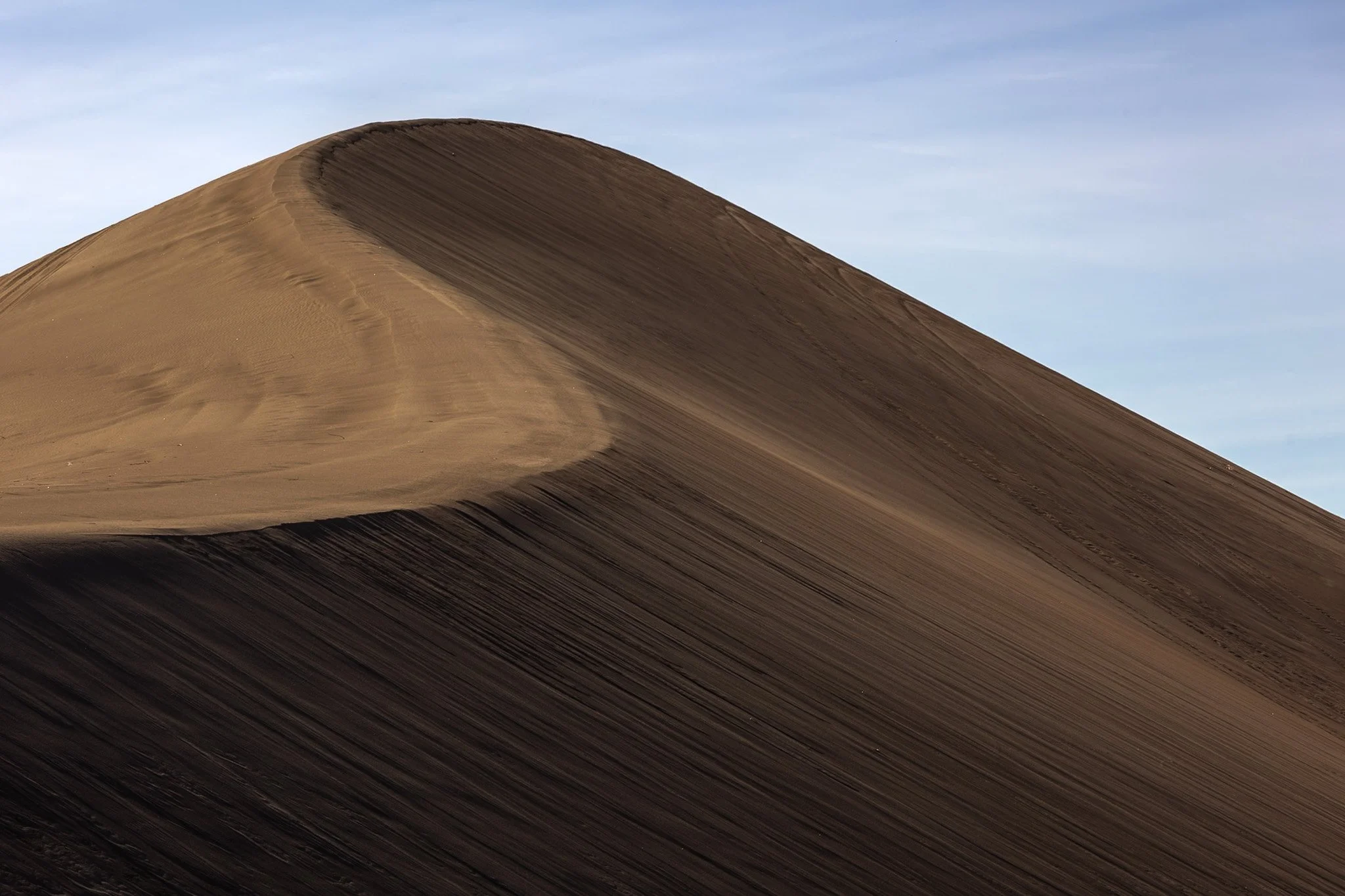
The dunes in and around Death Valley are primarily shaped by wind, which picks up and transports sand particles across the valley floor. Sediment from surrounding mountains supplies the sand forming these natural features.
The wind's constant movement reshape the dunes, causing them to shift across the valley, often forming barchan dunes which hold crescent shapes, such as the one seen here.
I found this specific dune formation completely deserted (excuse the pun) in the early morning. Walking to the base of it, it was tough not to be struck by the gigantic sense of time, space, and form the area offers up. This telephoto capture isolated its gentle untouched waves towering on the horizon from miles away.

In the Midwest, nuclear power plants are a vital part of the energy infrastructure, and many of them are surrounded by sprawling cornfields. This unusual pairing is more practical than it might seem. Nuclear plants require large safety buffer zones, which makes rural farmland an ideal setting.
At the same time, the actual footprint of a nuclear facility is relatively small, allowing the surrounding land to continue being used for agriculture. Illinois, in particular, stands out as the top nuclear-generating state in the country, with 11 reactors at six sites, most of them nestled in farming regions.
Having just finished photographing these monoliths from the other side, I was stunned by the scene developing in my rear view mirror as I sped down the country road. With someone tailgating me, I signaled at the next service road, parked in front of a farm, and quickly set up my tripod to grab this shot.
Haystack Rock near Pacific City, also known as Chief Kiwanda Rock, is an enormous sea stack located just offshore from Cape Kiwanda in Pacific City, Oregon.
Standing approximately 327 feet, it is one of the tallest sea stacks on the Oregon coast, even taller than the more famous Haystack Rock in Cannon Beach.
This was taken during a bustling evening near the Pelican Brewing Company, where patrons dined as the light broke through at golden hour, giving way to these stunning clouds behind the sea stack, casting its true form in silhouette. And if you look closely you’ll see the staggering amount of birds which call it home.

Lone Eagle Peak is a marvel among Colorado’s already stunning collection of mountains peaks.
Named for Charles Lindbergh, the “Lone Eagle”, after his historic transcontinental flight, the mountain is tucked in the Indian Peaks Wilderness and requires at 15 mile hike to reach base where two mountain lakes sit.
Having acquired an overnight permit six months earlier (all of which sold out in thirty seconds), I photographed this after a particularly grueling hike, camping and camera gear in tow. But being able to photograph this Grinch-like peak with the right gear made it all worth it.
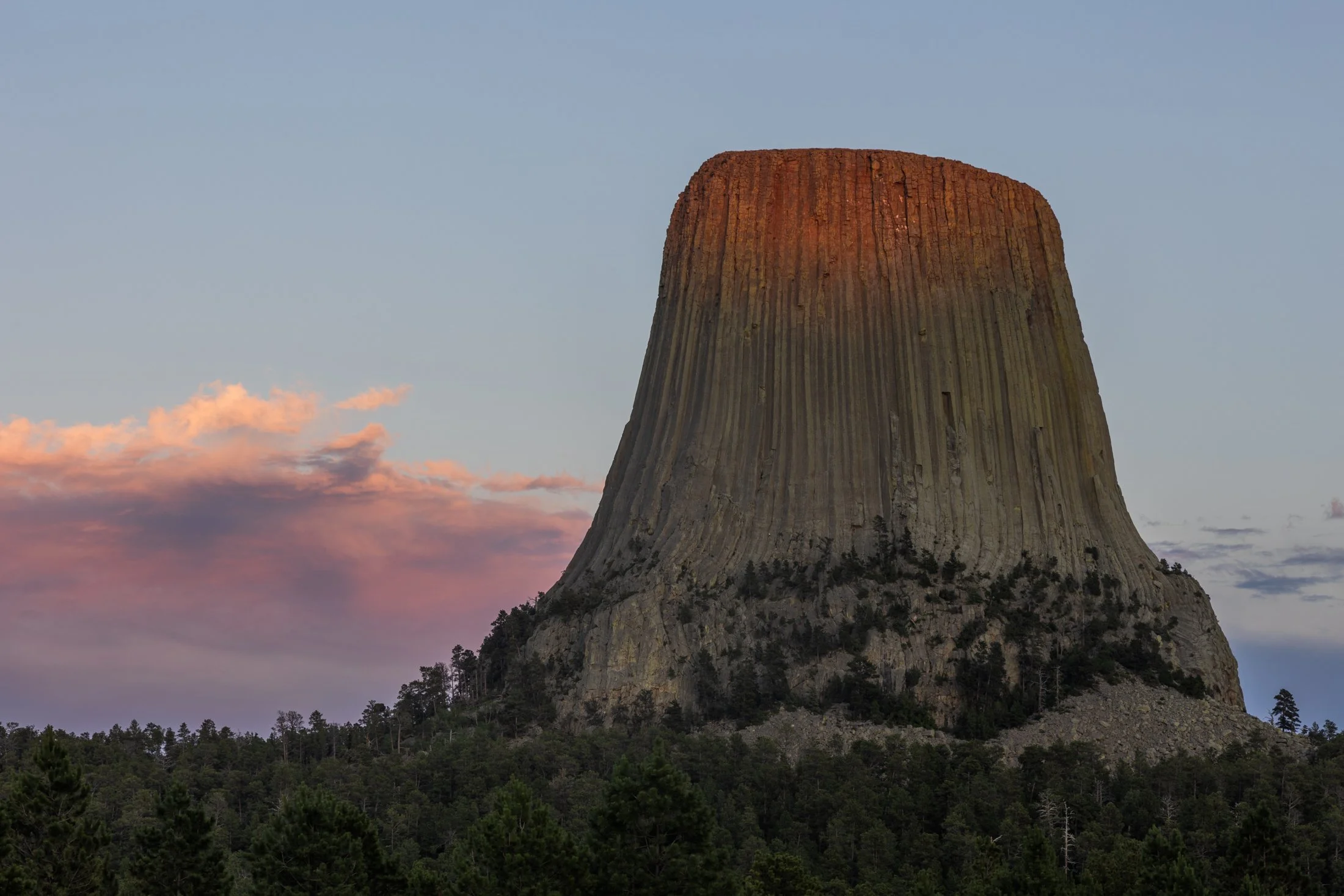
Standing at 867 feet tall, Devil’s Tower, located in eastern Wyoming, has been a sacred site for Native Americans for centuries as well as being featured prominently in “ Close Encounters of the Third Kind” (1977).
The Lakota tribe refers to it as Mato Tipila, roughly translating to “Bear Lodge”. One narrative surrounding its formation involves two girls attempting to escape a large bear by scurrying up a rock formation. The Great Spirit, seeing their plight, rose the rock high into the air to protect them. As the bear attempted to reach them, he clawed the sides of the rock, which formed the basalt columns seen today.
After renting a cabin at the nearby KOA, where “Close Encounters of the Third Kind” is shown every night in front of the monolith, I drove to the southern side at sunset to capture the light slowly fading from the tower. While standing there I could only think one thought; the energy of this land is palpable.

Iconic, religious, Hollywood-graced, the East and West Mitten Buttes tower over the landscape at Monument Valley along the Utah-Arizona border.
These buttes hold religious significance for the Navajo People with legend holding that they are the remains of great religious deities. Later John Ford found his home in Monument Valley and made countless westerns there with John Wayne, with the Mittens featuring prominently in films such as “The Searchers” (1956).
Monument Valley maintains one of the best campsites I’ve ever had the pleasure of camping at. It sits atop a sand band looking out towards The Mittens, evoking a drive-in movie theater, replacing the screen with one of the best views in the West. I later focused my efforts on the West Mitten at sunset.
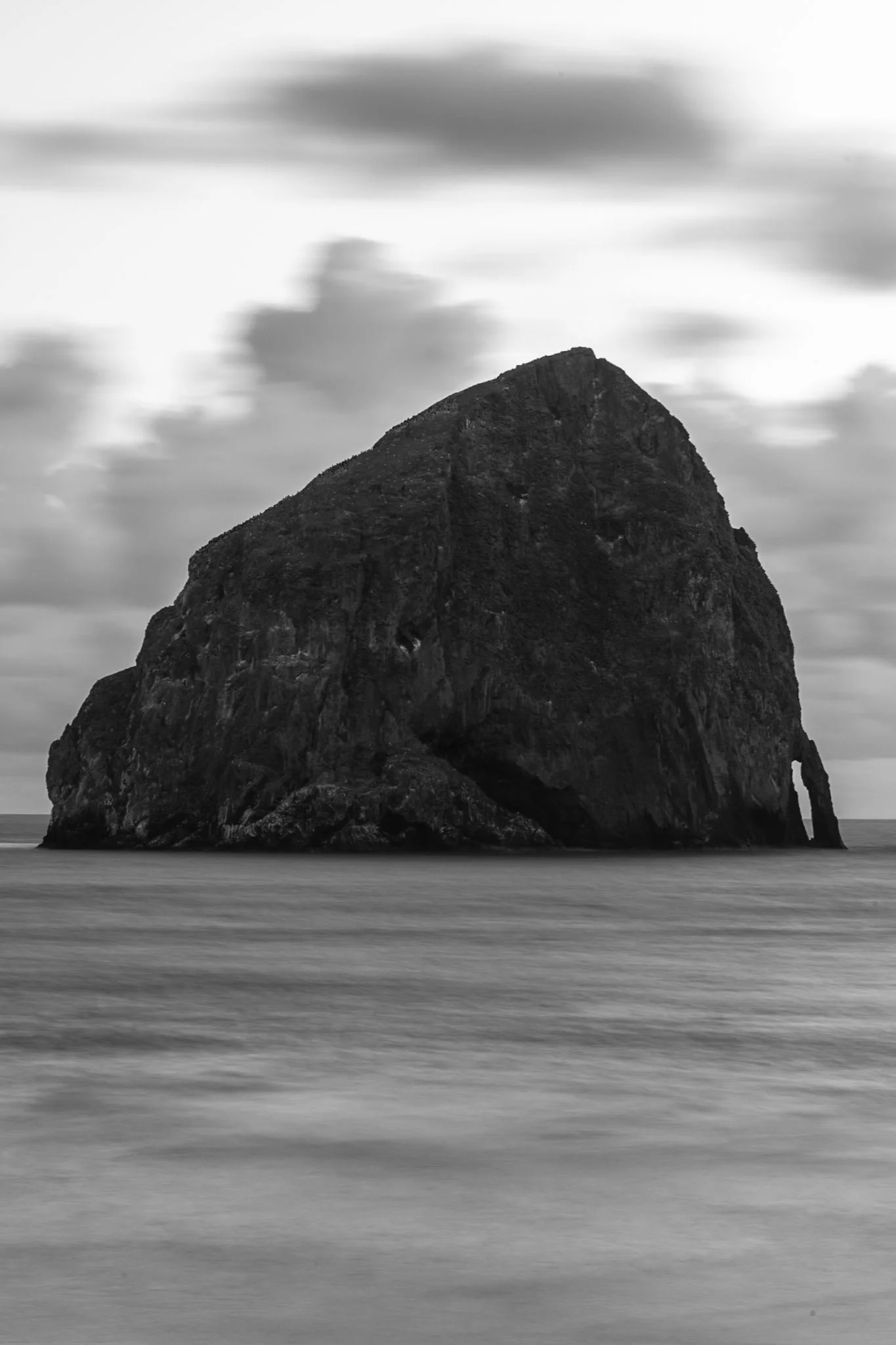
Haystack Rock near Pacific City, also known as Chief Kiwanda Rock, is an enormous sea stack located just offshore from Cape Kiwanda in Pacific City, Oregon.
Standing approximately 327 feet, it is one of the tallest sea stacks on the Oregon coast, even taller than the more famous Haystack Rock in Cannon Beach.
This was taken during a bustling evening near the Pelican Brewing Company, where patrons dined as the light broke through at golden hour, giving way to these stunning clouds behind the sea stack. After taking a sunset shot, I found the solitary nature of the rock against the ocean waves fascinating and wanted a visual that gave a sense of its unmoving nature over the past 17 million years.

Mirror Lake near Granby, Colorado, is a pristine alpine gem nestled in the Indian Peaks Wilderness, offering a breathtaking reflection of the dramatic Lone Eagle Peak.
Accessible via a scenic hike from Monarch Lake, Mirror Lake sits at an elevation of over 10,000 feet and is renowned for its crystal-clear waters and tranquil setting. The lake is a popular destination for backpackers, photographers, and nature lovers seeking a true backcountry experience in the wilderness.
While this was one of the most tiring hikes of my life, due to my added camera weight while backpacking, the trek was more than worth it. After making camp the previous night, this day involved traversing the surrounding area. I found this view summed up the vibe of this surreal setting.
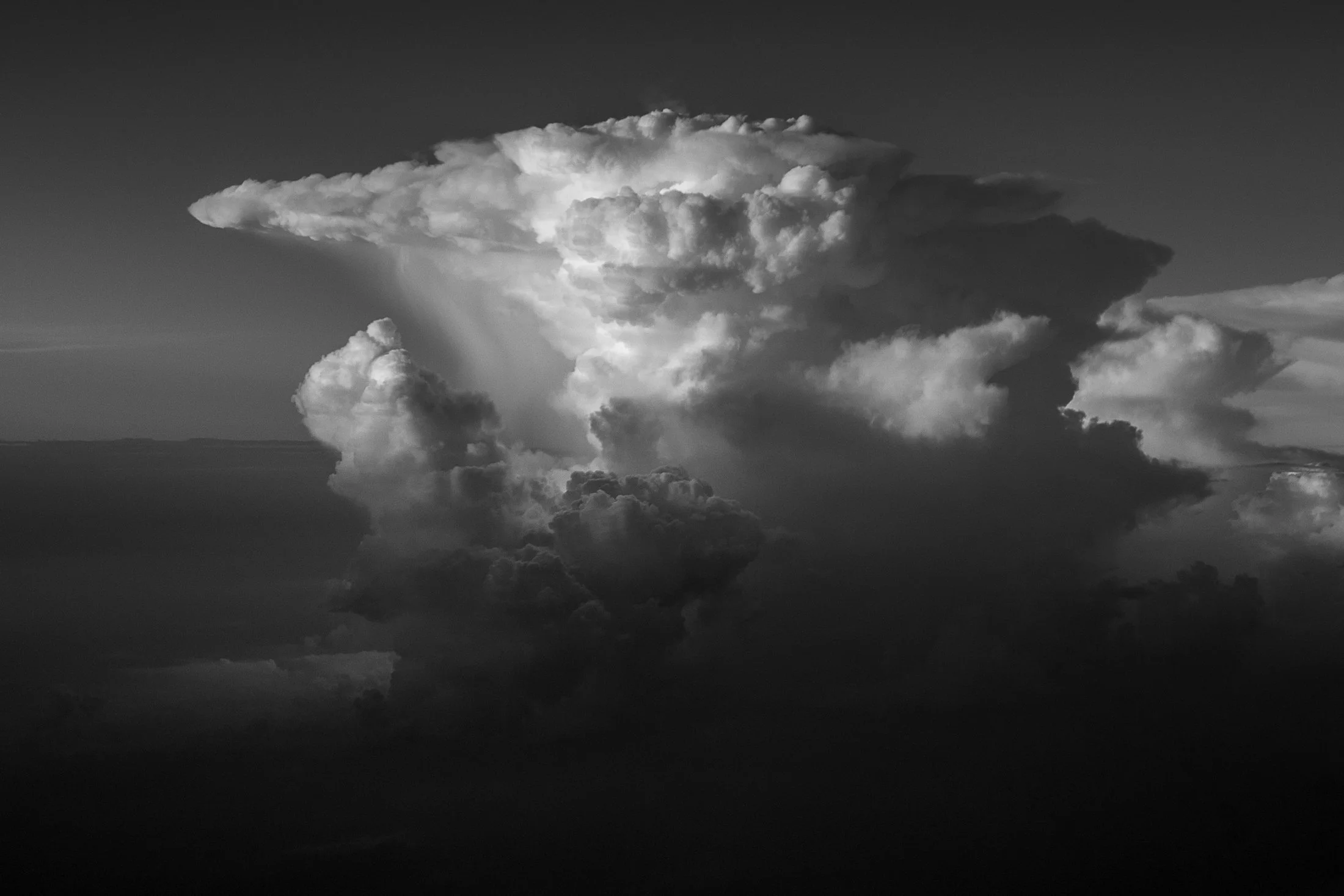
Cumulonimbus clouds are among the most powerful and visually striking clouds in the atmosphere. The only clouds that produce thunder and lightning, these towering giants can reach heights of over 12 miles.
One of the most distinctive features of a mature cumulonimbus cloud is its anvil-shaped top such as the one seen here, which forms when the cloud's upward growth is halted by the tropopause, causing the upper part to spread out horizontally.
I was lucky enough to witness this fascinating formation while taking off from Chicago at the tail end of a storm. The sheer size was daunting, and the setting sun raked against the cloud perfectly. This is an alternate to the color version, as I found both offer completely different vibes.

The Indian Peaks Wilderness is a protected wilderness area in north-central Colorado, encompassing approximately 73,931 acres within the Arapaho and Roosevelt National Forests, as well as a portion of Rocky Mountain National Park.
Established by Congress in 1978, it offers a pristine natural environment characterized by rugged granite peaks, glacially carved valleys, and over 50 alpine lakes.
Hiking up to Lone Eagle Peak was one of the most tiring hike of my life, due to my added camera weight while backpacking, but the trek was more than worth it. This was taken right as we were leaving the area, and luckily I turned around to see this composition encapsulating all that makes this wilderness truly unique.
Standing at 867 feet tall, Devil’s Tower, located in eastern Wyoming, has been a sacred site for Native Americans for centuries as well as being featured prominently in “ Close Encounters of the Third Kind” (1977).
One narrative surrounding its formation involves two girls attempting to escape a large bear by scurrying up a rock formation. The Great Spirit, seeing their plight, rose the rock high into the air to protect the. The distinctive basalt columns were formed from the claws of this bear’s attempt to reach them.
After renting a cabin at the nearby KOA, where “Close Encounters of the Third Kind” is shown every night in front of the monolith, I drove to the southern side at sunset to capture the light slowly fading from the tower. While standing there I could only think one thought; the energy of this land is palpable.